
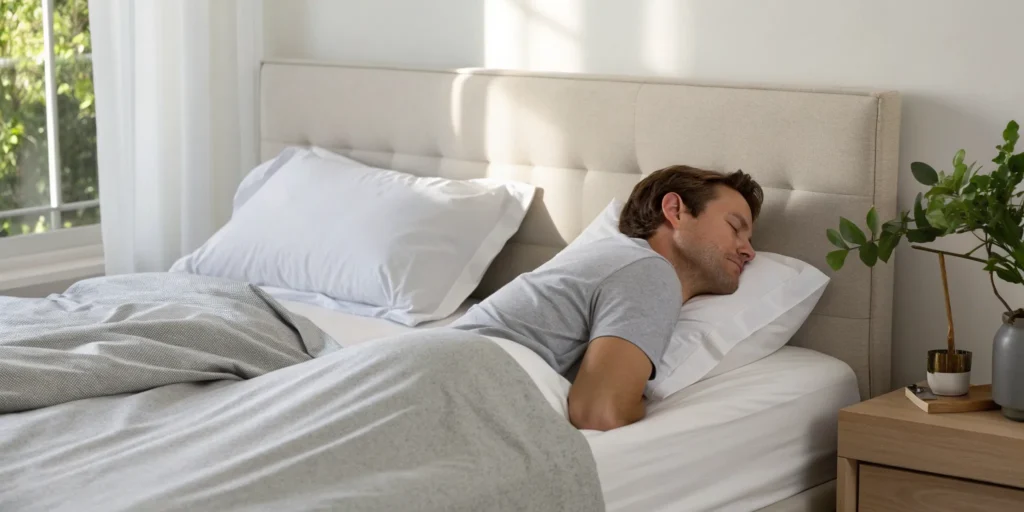
Have you ever wondered why you can sleep peacefully for hours on your side, only to start snoring the second you roll onto your back? This specific trigger can feel like a strange mystery, but the answer is surprisingly straightforward. The reason for snoring on back but not side comes down to how your body’s soft tissues react to gravity when you’re lying down. When you’re on your back, your tongue and soft palate are more likely to relax and fall backward, narrowing your airway and creating the vibrations we hear as snoring. We’re here to demystify this common issue and provide clear, practical steps to help you maintain an open airway all night long.
Key Takeaways
- Your sleep position is key: Lying on your back allows gravity to pull your tongue and soft tissues into your airway, creating the obstruction and vibration that results in snoring.
- You can actively manage snoring at home: Simple strategies, such as using pillows to encourage side-sleeping and avoiding alcohol before bed, can effectively open your airway and lead to quieter nights.
- Loud snoring can be a health signal: If your snoring is chronic and paired with other symptoms like daytime exhaustion or observed pauses in breathing, it’s crucial to seek a professional opinion to rule out underlying conditions like sleep apnea.
Why Does Sleeping on Your Back Cause Snoring?
If you’ve ever been told you only snore when you’re on your back, you’re not alone. It’s a common pattern, and it all comes down to simple anatomy and physics. When you lie on your back, you create the perfect conditions for your airway to become partially blocked, which produces that all-too-familiar rattling sound. Understanding exactly what’s happening in your throat is the first step toward finding a solution for quieter, more restful nights for both you and your partner.
How Gravity Works Against Your Airway
Think of gravity as the main culprit behind back-snoring. Throughout the day, gravity helps keep everything in place. But when you lie on your back, its pull shifts. Gravity tugs your jaw, tongue, and the soft tissues at the back of your throat downward. This movement narrows the airway, leaving less room for air to pass through freely. Your body still needs the same amount of oxygen, so it tries to pull air through this tighter space, causing the surrounding tissues to vibrate. That vibration is the sound we know as snoring.
The Role of Your Tongue and Soft Tissues
It’s not just your tongue causing the issue; it’s a team effort. The soft palate, the fleshy area at the back of the roof of your mouth, and the uvula (the dangling tissue in the back of your throat) are also involved. When you sleep, all the muscles in your body relax, including these. When you’re on your back, gravity pulls this collection of relaxed tissue backward, creating a partial obstruction. As air rushes past this floppy, narrowed passage, the tissues vibrate against each other, creating the loud, disruptive noise of a snore.
The Perfect Storm for Nightly Noise
The combination of your sleep position, gravity, and muscle relaxation creates a perfect storm for snoring. This effect becomes even more pronounced during the deeper stages of sleep when your muscles are at their most relaxed. This is why your snoring might get louder as the night goes on. While changing your position can help, persistent and loud snoring can sometimes point to underlying issues. If you’re struggling with snoring, exploring professional sleep and snoring treatments can help you identify the root cause and find a lasting solution for peaceful sleep.
How Your Sleep Position Affects Your Breathing
If you’ve ever been told you only snore when you’re on your back, there’s a simple, scientific reason for it. The way you position your body during sleep directly influences how easily air moves through your throat. While you might feel comfortable snoozing on your back, it’s often the prime position for creating that familiar, rumbling sound. Understanding the mechanics of what’s happening can be the first step toward finding a solution for quieter nights and better rest.
Think of it as a plumbing issue. When the pipes are clear, everything flows smoothly. But if something obstructs the pipe, things get noisy. For many people, sleeping on their back creates the perfect obstruction in their airway. The good news is that this is often a positional issue, meaning a simple change can make a world of difference for your sleep quality.
A Look Inside: Back vs. Side Sleeping
When you sleep on your back, you’re setting the stage for gravity to work against you. In this position, your jaw, tongue, and the soft tissues at the back of your throat can fall backward, partially blocking your airway. This creates a narrower passage for air to travel through. As you breathe, the air that squeezes through this smaller opening causes the surrounding tissues to vibrate, producing the sound of snoring.
Contrast that with sleeping on your side. In a side-sleeping position, gravity isn’t pulling your tongue and soft tissues directly into your airway. Instead, they stay to the side, keeping the passage clear. For some people, the change is immediate and dramatic; studies have shown that simply turning from the back to the side can completely stop snoring and other breathing interruptions.
Why Your Airway Narrows
The core issue behind snoring is a narrowed airway. When you’re awake, your muscles keep your throat open and firm. But as you fall asleep, these muscles relax. If you’re on your back, this relaxation combines with the force of gravity to create a perfect storm. The base of your tongue and your soft palate collapse into the back of your throat, leaving less room for air to pass.
This narrowing forces the air you breathe to move faster through a smaller space. It’s similar to how a partially blocked garden hose sprays water with more force. This turbulent airflow is what causes the soft tissues to vibrate. The more the airway narrows, the more forceful the airflow becomes, and the louder the snoring gets.
The Impact of Muscle Relaxation
Muscle relaxation is a natural and necessary part of falling asleep, but it’s also a key player in the snoring equation. During sleep, the muscles throughout your body lose tone, including the ones that support the tissues in your throat. According to the Mayo Clinic, when these throat muscles relax too much, they can no longer hold your airway wide open.
When you’re lying on your back, these relaxed, floppy tissues are much more likely to collapse and obstruct your breathing. This creates the vibrations we hear as snoring. While muscle relaxation happens in any sleep position, its impact is most significant when you’re on your back, where gravity can easily pull everything toward the back of your throat.
Is Your Snoring a Sign of Something More?
While a little snoring now and then is usually harmless, consistent, loud snoring can be your body’s way of sending a signal. If you find that your snoring is a nightly occurrence, especially when you’re on your back, it might be more than just an annoyance for your partner. It could be an indicator of an underlying health issue that deserves your attention. Understanding the potential risks is the first step toward getting back to quiet, restorative sleep and better overall health.
The Connection to Sleep Apnea
Snoring is often connected to a common but serious sleep disorder called Obstructive Sleep Apnea (OSA). With OSA, your breathing repeatedly stops and starts while you sleep because your airway becomes blocked. While not everyone who snores has sleep apnea, it’s a primary symptom. If your partner mentions you gasp or choke in your sleep, or if you wake up with a headache, it’s a good idea to investigate. Getting a proper diagnosis is key, as effective sleep and snoring treatments can make a world of difference in your quality of life and overall wellness.
How Snoring Can Affect Your Heart Health
Ignoring the signs of sleep apnea can have consequences that go far beyond a rough night. The repeated drops in your blood oxygen levels put significant strain on your cardiovascular system. Over time, this can lead to major health problems, including high blood pressure, heart disease, and stroke. It can also affect your mood, memory, and hormone levels. Taking a holistic approach to your health means looking at how different systems are connected, and sleep is a foundational piece of that puzzle. Addressing your snoring is a critical step for your long-term heart health.
The Reason You’re Tired All Day
Do you ever feel like you got a full night’s sleep but still wake up exhausted? Snoring linked to sleep apnea could be the culprit. The constant interruptions to your breathing prevent your brain from reaching the deep, restorative stages of sleep. Your body is working overtime all night just to breathe, so you never truly rest. This leads to that all-too-familiar feeling of daytime fatigue, irritability, and brain fog. Getting your snoring checked out isn’t just about being quieter; it’s about reclaiming your energy. Proper treatment can dramatically improve how you feel from the moment you wake up.
Actionable Ways to Stop Snoring on Your Back
Now that you know why sleeping on your back can turn into a nightly noise fest, let’s get into the good stuff: how to fix it. The great news is that you have plenty of options, from simple adjustments you can make tonight to lifestyle changes that offer long-term relief. These strategies are all about creating a better environment for airflow, so you (and your partner) can finally get some quiet, restorative sleep. Here are a few practical ways to get started.
Simple Positional Therapy Techniques
This sounds technical, but it’s really just about training your body to stay off your back. For many people, simply switching to side-sleeping is the most effective way to keep the airway open and stop snoring in its tracks. This approach is so helpful that it’s considered a common and helpful treatment for snoring and even some forms of sleep apnea. The classic trick is to place a pillow behind your back to create a barrier that prevents you from rolling over in your sleep. It might feel a little strange at first, but with a bit of consistency, your body will adapt to the new position.
The Right Way to Use Pillows
Your pillows can be your best allies in the fight against snoring. If you’re determined to stay a back-sleeper, try a wedge pillow. Unlike regular pillows that just prop up your head, a wedge pillow helps lift your head and upper body, using gravity to your advantage by keeping your airway clearer. For those trying to become side-sleepers, a body pillow is a game-changer. Hugging a body pillow not only makes side-sleeping more comfortable but also provides a physical buffer that makes it much harder to roll onto your back. Experiment with different pillow arrangements to find what gives you the most support and comfort.
Key Lifestyle Adjustments for Quieter Nights
Sometimes, the path to quieter nights starts with your daily habits. Extra weight, especially around the neck, can narrow your airway and contribute to snoring. Making changes to support a healthy weight can make a significant difference in your sleep quality. At RewindMD, we offer personalized weight loss programs that can help you reach your goals. Another key adjustment is to be mindful of alcohol consumption, particularly in the evening. Alcohol relaxes the muscles in your throat, making them more likely to collapse and obstruct your breathing while you sleep. Cutting back, especially before bed, can lead to an immediate improvement.
What to Avoid Before Bed
What you do in the hours leading up to sleep can have a huge impact on whether you snore. Try to avoid eating large, heavy meals right before you lie down, as a full stomach can press on your diaphragm and make snoring worse. It’s also wise to steer clear of sedatives or certain medications that can overly relax your throat muscles, unless prescribed by your doctor for a specific condition. Just like alcohol, these substances can interfere with your muscle tone and disrupt normal breathing patterns during sleep. Creating a calming pre-bed routine that avoids these triggers can set you up for a much quieter night.
How to Train Yourself to Sleep on Your Side
If you’re a dedicated back sleeper, the idea of changing your go-to position might seem impossible. But with a little consistency and a few clever tricks, you can train your body to prefer sleeping on its side. It’s one of the most effective ways to open your airway and reduce snoring. The key is to make side-sleeping more comfortable and back-sleeping less appealing. It takes some patience, but creating this new habit can lead to quieter nights and more restful sleep for both you and your partner. Let’s walk through some practical strategies you can start using tonight.
DIY Methods and Body Pillow Strategies
You can start your side-sleeping journey with items you already have at home. The simplest approach is to use pillows to your advantage. A full-body pillow is fantastic for this; you can hug it to keep you propped on your side and place it behind your back to prevent you from rolling over. If you don’t have a body pillow, a few regular pillows strategically placed around you can work just as well. For a more old-school method, try the tennis ball trick. Simply sew a tennis ball into the back of an old t-shirt. The discomfort will gently nudge you back onto your side if you start to roll onto your back during the night.
Helpful Devices and Modern Sleep Aids
If pillows aren’t quite doing the trick, you might want to explore some modern sleep aids. There are wearable devices that gently vibrate whenever you roll onto your back, conditioning you to stay on your side without fully waking you up. Special anti-snoring pillows are also designed with contours that encourage side sleeping or keep your head properly aligned. It’s also worth noting that if you use a device like a mandibular advancement splint (a type of mouthguard for snoring), it tends to be more effective when you’re on your side. Gravity can still cause your tongue to fall back even with the device, so side-sleeping gives it the best chance to work.
How to Make Side-Sleeping a Lasting Habit
Turning side-sleeping into your new default position is all about consistency. Choose a method, whether it’s a body pillow or a wearable device, and stick with it every night. Your body needs time to adjust and create a new muscle memory for sleep. While these home strategies can make a big difference, they aren’t a replacement for professional medical care. If your snoring is loud, persistent, or accompanied by gasping sounds, it could be a sign of a more serious issue. It’s always best to discuss your concerns with a professional who can help you find the right sleep and snoring treatments for your specific needs.
When Should You Talk to a Professional About Snoring?
While changing your sleep position and adjusting your lifestyle can make a world of difference, sometimes snoring is your body’s way of signaling a deeper issue. If you’ve tried everything and the nightly noise continues, or if your snoring is accompanied by other concerning symptoms, it’s time to stop guessing and start getting answers. Seeking a professional opinion isn’t about overreacting; it’s about taking a proactive step toward protecting your long-term health and finally getting a truly restful night’s sleep. A specialist can help you understand the root cause of your snoring and guide you toward the most effective solution.
Warning Signs It’s Time to Get Help
It’s easy to brush off snoring as a minor annoyance, but certain signs indicate it might be linked to an underlying condition like sleep apnea. According to the Mayo Clinic, you should see a doctor if your snoring is paired with any of the following symptoms:
- Pauses in breathing observed by a partner
- Excessive daytime sleepiness
- Difficulty concentrating
- Morning headaches
- Waking up with a sore throat
- Restless sleep
- Gasping or choking at night
These aren’t just side effects of a bad night’s sleep; they are red flags that your body isn’t getting the oxygen it needs while you rest. Paying attention to them is the first step toward a solution.
What to Expect from a Sleep Study
If your symptoms suggest a potential sleep disorder, your doctor will likely recommend a sleep study. While it might sound intimidating, it’s a straightforward and essential tool for diagnosis. As the American Medical Association points out, a sleep study is the only definitive way to know if your snoring is harmless or a sign of sleep apnea. During the study, sensors monitor your breathing, oxygen levels, heart rate, and brain activity overnight. This can often be done in the comfort of your own home with a portable kit. The data collected gives a clear picture of what’s happening while you sleep, allowing for an accurate diagnosis and a targeted treatment plan.
Advanced Treatment Options to Consider
Once you have a diagnosis, you can explore effective, long-term solutions that go beyond just changing your sleep position. Depending on the cause of your snoring, a custom-fitted oral appliance can be a game-changer. This device works by gently shifting your jaw forward to keep your airway open throughout the night. For others, treatments that address the tissues in the throat can reduce the vibrations that cause snoring. At RewindMD, we specialize in creating personalized sleep and snoring treatments that address the specific cause of your issue. We’ll work with you to find a comfortable and effective solution that helps you and your partner enjoy quiet, restorative sleep.
Find Your Solution for Quiet Sleep at RewindMD
If snoring consistently disrupts your nights and leaves you feeling tired, you don’t have to accept it as your new normal. While simple adjustments like changing your sleep position can offer temporary relief for some, they often don’t address the root cause of the problem. Lasting, quiet sleep comes from understanding exactly why you’re snoring in the first place. A personalized approach is key, because the right solution for one person may not be the right one for you.
At RewindMD, we know that quality sleep is fundamental to your health, energy, and confidence. Our physician-led team takes a comprehensive look at what’s causing your snoring. We go beyond surface-level advice to create a plan tailored specifically for you. Our goal is to help you find a lasting solution with our sleep and snoring treatments, so you and your partner can finally get the deep, restorative rest you deserve.
We’ll work with you to explore a range of options, from effective lifestyle changes to advanced interventions that fit your needs. As many doctors will tell you, it’s important to properly investigate snoring, as it can sometimes be a sign of other health concerns. Taking that first step to get professional guidance can make all the difference. Schedule a consultation with our team today to reclaim your quiet nights and wake up feeling refreshed and ready for the day.
Related Articles
- We Tested 9 Devices: Best Way to Stop Snoring Reviews
- Find the Most Effective Snoring Treatment for You
- Beyond the Noise: Effects of Snoring on the Body
Frequently Asked Questions
Is it really that bad to snore if it only happens when I’m on my back? While occasional, light snoring isn’t usually a cause for alarm, consistent snoring can still disrupt the quality of your sleep, even if you don’t realize it. It can prevent you from reaching the deep, restorative stages of rest, which is why you might feel tired during the day. More importantly, it can sometimes be a sign of an underlying issue like sleep apnea, so it’s worth paying attention to.
I’ve tried using pillows to stay on my side, but I always wake up on my back. What now? This is a really common frustration, as our bodies tend to return to their most familiar positions during sleep. If you’ve given positional therapy a good try and it isn’t sticking, it might be time to explore other solutions. A specialist can help determine if a different approach, like a custom-fitted oral appliance, would be more effective at keeping your airway open no matter which position you end up in.
Will losing weight completely stop my snoring? For many people, reaching a healthy weight makes a huge difference. Excess weight, especially around the neck, can narrow the airway and is a primary contributor to snoring. Losing it can significantly reduce or even eliminate the problem. However, it isn’t a guaranteed fix for everyone, since anatomy and other factors also play a role. It’s an excellent step for your overall health, but if snoring continues, other treatments may be necessary.
How can I tell if my snoring is just snoring or if it’s sleep apnea? The main difference is what’s happening with your breathing. Simple snoring is the sound of air vibrating through a partially narrowed airway. With sleep apnea, that airway becomes fully blocked, causing you to repeatedly stop breathing for brief periods. The biggest clues are often things a partner notices, like gasping or choking sounds. Other red flags include waking up with a headache or feeling exhausted even after a full night in bed.
Are there professional treatments for snoring that don’t involve a CPAP machine? Yes, absolutely. While a CPAP machine is a very effective treatment for severe sleep apnea, it’s far from the only option available for snoring and milder cases. Many people find great success with custom-fitted oral appliances. These devices look similar to a mouthguard and work by gently shifting your jaw forward to keep your airway clear while you sleep. A consultation with a professional can help you find the most comfortable and effective solution for your specific needs.