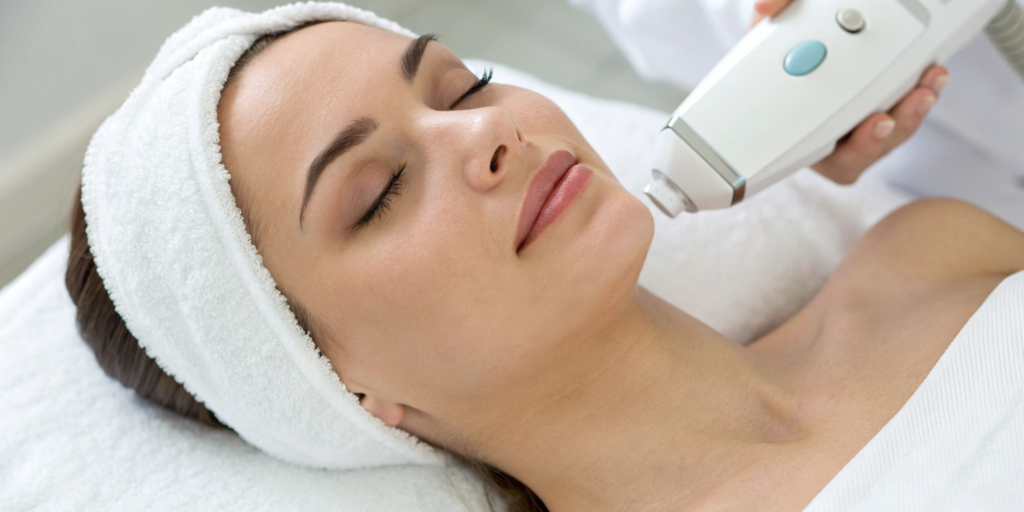
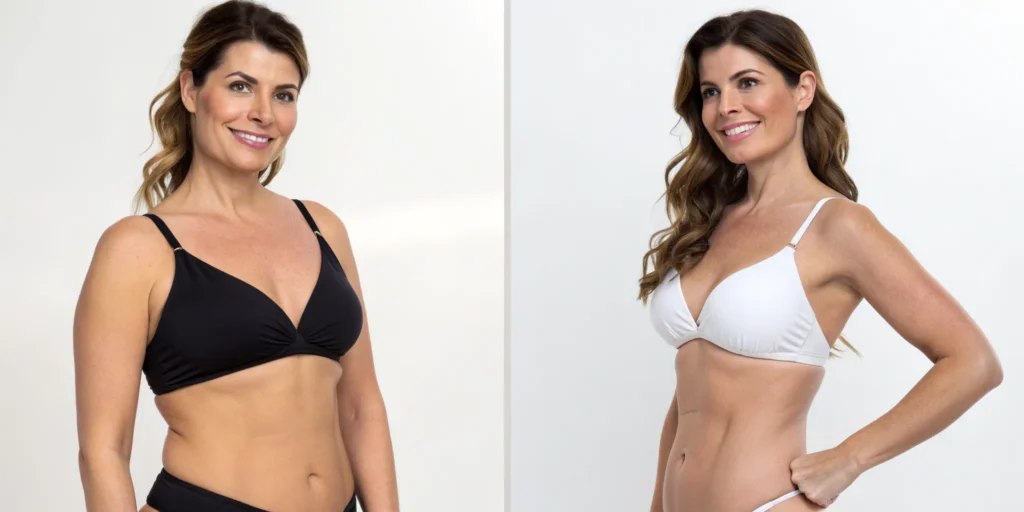
It’s easy to get lost scrolling through non surgical body contouring before and after photos. The transformations can be inspiring, but they also raise a lot of questions. How much of that is lighting? How long did it take? Are those results even realistic for me? This guide is designed to give you the full picture. We’ll break down how to analyze those photos with a critical eye, explain the technology behind the results, and discuss what you can truly expect from your own treatment journey. Understanding the process is the first step toward feeling confident in your decision and excited about your potential outcome.
Key Takeaways
- Think fine-tuning, not major weight loss: These treatments are designed to address specific, stubborn areas of fat for those already near their target weight, acting as the final step in refining your shape.
- Match the technology to your specific goal: Each technology serves a different purpose—some reduce fat, others build muscle, and some tighten skin. A professional consultation is the best way to create a personalized plan that aligns the right treatment with your desired outcome.
- Your provider and lifestyle are key to lasting results: The success of your treatment depends on selecting a qualified, physician-led provider for a safe procedure and maintaining a stable weight through healthy habits to ensure your new contours last.
What Is Non-Surgical Body Contouring?
Non-surgical body contouring refers to a group of treatments that help shape and define your body without the need for surgery. Think of it as the final step in your wellness journey—a way to address those stubborn areas that just won’t budge, no matter how consistent you are with diet and exercise. These procedures are designed to reduce pockets of fat and, in many cases, tighten the skin, giving you a smoother, more toned appearance. Instead of incisions, they use advanced technology to achieve results with minimal to no downtime.
How It Works
So, how do these treatments actually work without surgery? It comes down to clever technology. Most non-surgical body contouring methods use a specific type of energy to target and eliminate fat cells beneath the skin. For example, some treatments use controlled cooling to freeze and destroy fat cells, while others use radiofrequency or laser energy to heat them up. Once the fat cells are treated, your body’s natural metabolic processes take over, gradually clearing them away over several weeks. Many of these technologies also trigger your body to produce more collagen, which helps firm and tighten the skin in the treated area for a smoother finish.
Are You a Good Candidate?
These treatments are fantastic, but they aren’t for everyone. The best candidates are typically people who are already close to their ideal body weight but need help with specific, localized pockets of fat. If you have stubborn fat on your abdomen, thighs, or flanks that diet and exercise haven’t touched, you could be a great fit. It’s also an excellent option if you’re looking for a solution with minimal downtime or want to avoid the risks associated with surgery. Non-surgical fat reduction is not a weight-loss procedure, but rather a way to sculpt and refine your shape.
A Guide to Popular Body Contouring Treatments
When you start exploring non-surgical body contouring, you’ll find a few key technologies leading the way. Each one works a bit differently to target fat, build muscle, or tighten skin, which is why it’s so important to understand your options. Think of these treatments as powerful tools that can help you refine your shape and address those stubborn areas that diet and exercise can’t seem to touch. They aren’t magic wands for major weight loss, but rather sophisticated methods for sculpting and enhancing your natural physique, helping you achieve the results you’ve been working towards.
The real beauty of these technologies is their precision. They allow us to target specific concerns—like a pocket of fat on your abdomen, a lack of muscle definition in your glutes, or loose skin on your arms—without the need for invasive surgery. This means minimal downtime and a much more comfortable experience. The goal is to help you feel more confident and comfortable in your own skin by making subtle, yet significant, improvements. Understanding how each technology works is the first step in creating a personalized plan that aligns with your body and your aesthetic vision. Let’s walk through some of the most popular and effective body contouring treatments available today.
CoolSculpting (Cryolipolysis)
You’ve probably heard of fat freezing, and that’s exactly what CoolSculpting does. This treatment uses a technology called cryolipolysis to cool targeted fat cells to a temperature that destroys them without harming the surrounding skin or tissue. Your body then naturally processes and eliminates these dead cells over the following weeks. It’s an incredibly popular choice for tackling stubborn fat pockets on the abdomen, thighs, flanks (love handles), and under the chin. The procedure is non-invasive with minimal downtime, making it easy to fit into a busy schedule. Most people just feel a cold, tingling sensation as the treatment gets to work.
SculpSure (Laser Lipolysis)
Instead of freezing fat, SculpSure melts it away using laser technology. This treatment, known as laser lipolysis, directs controlled heat into fat cells, damaging their structure so your body can clear them out. A single session typically lasts about 25 minutes, making it a quick and efficient option. SculpSure is effective for reducing fat on the belly, love handles, back, and thighs. The applicators are flat, which allows for a more natural, feathered result at the edges of the treatment area. It’s another fantastic non-surgical method for people who are close to their ideal weight but need help with specific problem spots.
Emsculpt (Electromagnetic Muscle Stimulation)
Emsculpt is a game-changer because it’s the only treatment that builds muscle while also reducing fat. It uses high-intensity focused electromagnetic (HIFEM) technology to create powerful muscle contractions—far more intense than what you can achieve at the gym. A 30-minute session can feel like doing 20,000 crunches or squats! This process not only strengthens and tones muscles in the abdomen, buttocks, arms, and legs but also triggers a metabolic reaction that breaks down fat. It’s the perfect treatment if your goal is to achieve a more sculpted, athletic look rather than just fat reduction.
Radiofrequency Body Sculpting
If loose skin or cellulite is your main concern, radiofrequency (RF) treatments are an excellent choice. This technology uses RF energy to gently heat the deeper layers of your skin, which stimulates the production of new collagen and elastin. These are the essential proteins that keep your skin firm, smooth, and youthful. As collagen levels increase, your skin becomes tighter and more toned. RF is often used to complement fat reduction treatments or as a standalone procedure for improving skin texture and firmness. It’s a key part of many facial rejuvenation and anti-aging plans and works just as well for the body.
What Results Can You Realistically Expect?
Let’s talk about one of the most important parts of this process: your results. It’s easy to get swept up in amazing before-and-after photos, but it’s crucial to have a clear and realistic picture of what non-surgical body contouring can achieve. These treatments are fantastic for fine-tuning and sculpting specific areas, but they aren’t a substitute for a healthy lifestyle or a solution for significant weight loss.
The outcome depends on several factors, including the technology used, the area being treated, your body’s unique response, and the number of sessions you complete. The goal is a noticeable, natural-looking reduction in fat and an improved body shape. Think of it as putting the finishing touches on your hard work with diet and exercise—addressing those stubborn spots that just won’t budge. The results are gradual and subtle, leading to a more contoured silhouette over time.
Your Timeline for Visible Results
Patience is key when it comes to non-surgical body contouring. Unlike surgical procedures, the results aren’t immediate because your body needs time to do its work. After a treatment targets and breaks down fat cells, your body’s natural metabolic processes gradually flush them away.
You might start to notice subtle changes within a few weeks, but the most significant improvements typically appear over the following months. For most treatments, you can expect to see the final, optimal results around three to six months after your last session. This slow and steady progression allows for a very natural-looking transformation, without the sudden change or downtime associated with surgery.
Managing Expectations: Non-Surgical vs. Surgical
It’s important to understand the fundamental difference between non-surgical and surgical fat reduction. Procedures like liposuction physically remove a large volume of fat at once, leading to immediate and dramatic changes. Non-surgical methods, on the other hand, are designed for targeted fat reduction in smaller, more localized areas.
These treatments are perfect for tackling stubborn pockets of fat, not for removing large amounts. Because the results are more subtle, you’ll often need a series of treatments to achieve your desired look. The major upside? You get to avoid incisions, anesthesia, and lengthy recovery periods. It’s a trade-off: a less invasive process for a more gradual, refined outcome.
Which Body Areas Respond Best?
Non-surgical body contouring is incredibly effective for those frustrating areas where fat tends to linger, despite a healthy lifestyle. The treatments work best on localized pockets of fat that you can pinch, often referred to as “pinchable fat.”
Some of the most popular and successful treatment areas include the abdomen, flanks (or “love handles”), inner and outer thighs, upper arms, and the area under the chin. These are spots that are notoriously resistant to diet and exercise. Our body contouring and weight loss programs are designed to help you identify which technology is best suited to sculpt the specific areas you want to target, ensuring your treatment plan is perfectly tailored to your body and your goals.
What Do Before & After Photos Really Tell You?
Before-and-after photos are probably the first thing you look for when researching body contouring. They’re exciting and inspiring, offering a glimpse into what’s possible. But it’s important to view them as a guide, not a guarantee. These images showcase the potential of a treatment, but everyone’s body is unique and will respond differently. The key is knowing how to read these photos correctly so you can set realistic expectations for your own journey. A great gallery of photos tells a story of gradual improvement and targeted refinement, not an overnight miracle.
When you see a dramatic transformation, remember that it’s the result of a personalized treatment plan, time, and sometimes, complementary lifestyle changes. These photos represent the final outcome after the body has had weeks or even months to process the treated fat cells and heal. They don’t show the journey in between. It’s also helpful to look for photos of people with a similar body type and starting point to your own. This can give you a more realistic idea of what you might achieve. Let’s break down how to look at these photos with a savvy eye, so you can feel confident about the results you can achieve.
How to Accurately Analyze Results
When you’re scrolling through photos, remember that non-surgical results are subtle and appear over time. Unlike surgery, you won’t see a dramatic change overnight. Instead, treatments like CoolSculpting or SculpSure work to gradually reduce fat cells, leading to a slimmer, more refined shape over several weeks or months. Look for photos that show a clear, but natural-looking, reduction in specific areas.
Pay close attention to consistency between the “before” and “after” shots. Are they taken from the same angle? Is the lighting similar? Is the person standing in the same posture? Reputable providers will use standardized photography to track progress accurately. This ensures that the improvements you see are from the body contouring treatment itself, not just a trick of the camera.
The Impact of Photo Angles and Lighting
Let’s be real: a good photographer can make almost anything look different. The same is true for before-and-after photos. A slight shift in posture, a change in lighting, or a different camera angle can dramatically alter how a result appears. A shadow can create the illusion of a contour, while standing slightly turned can minimize a bulge. This isn’t necessarily meant to be deceptive, but it’s something to be aware of.
A trustworthy gallery will feature photos taken under consistent conditions to give you an honest look at the outcome. Look for images that show the treated area from multiple angles—front, side, and back. This gives you a more complete picture of the change. The goal is to see a genuine improvement in the body’s shape, whether it’s a smoother back, a less prominent belly pooch, or a more defined waistline.
Common Myths About Visual Results
One of the biggest myths is that non-surgical body contouring delivers the same results as liposuction. The truth is, these treatments are designed for fine-tuning, not a total overhaul. The results are gradual and less dramatic than surgery, which is why comparing pre-treatment photos with fully healed post-treatment images is so important. Think of it as sculpting, not debulking.
Another common misconception is that these treatments are a form of weight loss. Non-surgical fat reduction is most effective for people who are already near their ideal weight but struggle with stubborn pockets of fat that resist diet and exercise. According to the American Society of Plastic Surgeons, it’s not a solution for significant weight loss. If overall weight is a concern, exploring a comprehensive weight loss program might be a more effective first step.
Comparing Treatments: Effectiveness, Cost, and Downtime
Once you start exploring non-surgical body contouring, you’ll quickly see there are several fantastic options available. So, how do you choose the right one? The best approach is to compare them based on three key factors: effectiveness, cost, and downtime. The ideal choice depends entirely on your unique goals, your budget, and how much downtime you can fit into your life. Let’s break down what you need to know to find the perfect match.
A Look at Effectiveness by Body Area
Not all body contouring treatments are created equal, and their effectiveness often depends on the target area and your specific goal. For example, if you’re looking to reduce stubborn fat on your abdomen, thighs, or under the chin, a treatment like CoolSculpting might be a great fit. Studies show it can reduce fat in treated areas by up to 25% after just one session. Other technologies, like radiofrequency, are designed to tighten skin and improve its texture, while treatments like Emsculpt focus on building and toning muscle. The key is to match the technology to your desired outcome.
Breaking Down the Costs
Let’s talk about the investment. The cost of non-surgical body contouring varies widely based on the treatment, the size of the area, and how many sessions you’ll need. While it’s a financial commitment, it’s often more accessible than surgery. The popularity of these treatments is a testament to their value, with the body contouring market growing each year as more people seek effective solutions. During your consultation, we’ll create a personalized treatment plan that outlines the full cost, so you can make an informed decision.
What to Expect for Recovery
One of the biggest advantages of non-surgical body contouring is the minimal downtime. Most people can return to their daily activities almost immediately after their appointment. You might experience some mild, temporary side effects like redness, minor swelling, or soreness in the treated area, but these typically fade within a few days. Unlike surgery, which often requires a lengthy recovery, nonsurgical methods allow you to get back to your life without missing a beat. It’s a convenient and comfortable way to work toward your body goals.
Understanding the Side Effects and Safety Measures
It’s completely normal to have questions about the safety of any aesthetic treatment. The great news is that non-surgical body contouring has a strong safety profile, especially when compared to invasive surgical procedures. Because these treatments don’t require incisions or general anesthesia, they sidestep many of the risks associated with surgery, like infection and scarring. Most of the technologies used are FDA-cleared for fat reduction, meaning they have undergone rigorous testing for both safety and effectiveness.
Still, this is a medical procedure, and being fully informed is the best way to feel confident in your decision. Understanding what to expect during and after your session is a key part of the process. Let’s walk through the common, temporary side effects you might experience, potential risks to be aware of, and how a qualified, physician-led clinic ensures your safety every step of the way.
Common, Temporary Side Effects
After a body contouring session, most people experience only minor and temporary side effects. Think of it as your body’s natural response to the treatment as it begins to flush out the targeted fat cells. You might notice some redness, mild soreness, or slight swelling in the area that was treated. Some people also report a temporary tingling or numbness. These effects are completely normal and are usually a sign that the technology is working. For the vast majority of clients, these symptoms are mild and fade on their own within a few hours to a couple of days, requiring no downtime from your daily routine.
Potential Risks to Consider
While non-surgical treatments are significantly safer than surgery, it’s important to know that all medical procedures carry some level of risk. Though uncommon, potential complications can include more persistent pain, swelling, or changes in skin sensation. The specific risks often depend on the technology being used and your individual health profile. This is why a thorough consultation with a medical professional is so important. It gives you a chance to discuss your health history and understand any specific risks that might apply to you, ensuring you’re an ideal candidate for the treatment before moving forward.
How We Prioritize Your Safety
Your safety is always the top priority. At a physician-led clinic, every treatment begins with a comprehensive evaluation to confirm you’re a good candidate and to set clear, realistic expectations for your results. We discuss your goals and medical history to create a personalized treatment plan that is both effective and safe for you. By explaining our approach to body contouring and ensuring you understand every step, we help you feel confident and secure. Our team is highly trained in operating advanced technologies and is prepared to manage any side effects, ensuring you receive the highest standard of care from start to finish.
How to Choose the Right Treatment for Your Goals
With several effective non-surgical body contouring treatments available, figuring out the best one for you can feel like a big decision. The right choice isn’t one-size-fits-all; it depends entirely on your unique body, your specific goals, and your lifestyle. Think of this as a partnership between you and your provider. To find the perfect match, you first need to get clear on what you want to accomplish. Let’s walk through the key factors to consider so you can feel confident when you come in for a consultation. Understanding your own objectives is the first step toward achieving the results you’re looking for with our body sculpting and weight loss programs.
Define Your Target Areas
First, take a moment to pinpoint exactly which areas you want to address. Non-surgical body contouring is most effective for people who are near their ideal weight but struggle with stubborn pockets of fat that don’t respond to diet and exercise. Are you hoping to smooth out your lower abdomen, slim down your thighs, or target your flanks? Being specific is key. Some technologies are better suited for larger, denser areas of fat, while others excel at fine-tuning smaller, more delicate spots. Getting clear on your “what” and “where” will help your provider recommend the treatment that will give you the most satisfying and noticeable results.
Consider Your Budget and Timeline
Next, let’s talk about the practical side of things. One of the biggest draws of non-surgical treatments is that most require little to no downtime, making them easy to fit into a busy schedule. However, it’s important to remember that results aren’t instant. While you might see some initial changes, the final results can take several months to fully appear as your body naturally processes and eliminates the targeted fat cells. You should also consider your budget, as the total cost will depend on the type of treatment and the number of sessions needed to reach your goal. Thinking through these factors beforehand helps set realistic expectations for your journey.
Match the Technology to Your Desired Outcome
Finally, it’s time to connect your goals to the right technology. Different treatments offer different benefits, and it’s not just about fat reduction. Some technologies, like cryolipolysis, work by freezing fat cells. Others use radiofrequency or laser energy to heat and destroy them. And then there are treatments like Emsculpt that focus on building muscle tone while also reducing fat. If you’re also concerned about loose skin or cellulite, certain radiofrequency treatments can help with skin tightening. This is where a professional consultation is essential. We can help you understand the nuances of each option and design a personalized treatment plan that aligns perfectly with your desired outcome.
How to Find a Reputable Body Contouring Provider
Choosing the right provider is just as important as choosing the right treatment. The most advanced technology in the world won’t deliver the results you want in the wrong hands. Your provider should be a partner in your journey—someone who understands your goals, educates you on your options, and prioritizes your safety above all else. This is why seeking treatment at a physician-led clinic is so important; it ensures a high standard of care and medical oversight.
Finding a provider you trust involves a little homework. You’ll want to ask the right questions, check for specific credentials, and know which red flags to look out for. A great provider will be transparent and make you feel comfortable and confident in your decision. Think of your consultation as a two-way interview. You’re not just there to find out if you’re a good candidate for a procedure; you’re there to decide if the provider is a good fit for you. Taking the time to do this research upfront will help you feel secure and excited about your treatment plan.
Key Questions to Ask During Your Consultation
Your consultation is the perfect time to get all your questions answered. A reputable provider will welcome your curiosity and give you straightforward answers. Don’t hesitate to bring a list of questions with you. Start with the most important one: “What results can I realistically expect?” It’s crucial to have a provider who will talk to you about real results rather than just showing you glossy ads.
Here are a few other essential questions to ask:
- Am I a good candidate for this treatment, and why?
- How many sessions will I likely need to achieve my goals?
- What does the recovery or downtime look like?
- Can I see before-and-after photos of your actual patients who have had this procedure?
- Who will be performing my treatment, and what are their qualifications?
Credentials to Look For
When it comes to your body, credentials matter. Look for a clinic that is physician-led, meaning a medical doctor oversees the practice and its protocols. This ensures that your treatment plan is based on sound medical knowledge and a deep understanding of anatomy and physiology. The person performing your treatment should be a licensed and certified professional with extensive, hands-on training on the specific device being used.
Don’t be shy about asking to see certifications. A trustworthy clinic will be proud to show you their team’s qualifications. Experience is also key. Ask how many times they have performed the procedure you’re interested in. A provider who specializes in body contouring and weight loss will have the expertise to customize the treatment to your unique body shape and goals, ensuring a safer and more effective outcome.
Red Flags to Avoid
Knowing what to avoid is just as important as knowing what to look for. One of the biggest red flags is a provider who promises miracle results or pressures you into making a quick decision. Body contouring is a personal choice, and you should never feel rushed. Be wary of anyone who downplays the potential side effects or fails to discuss them with you. While non-surgical options generally have mild, temporary side effects, a good provider will be upfront about what to expect.
Also, watch out for vague pricing or a consultation that feels more like a sales pitch than a medical assessment. Your consultation should focus on your health, goals, and safety. If the facility seems unclean or the staff unprofessional, trust your gut and walk away. A clean, professional environment is a basic standard of care that should never be compromised.
Prepare for Your Treatment and Maximize Your Results
You’ve done your research and are excited to move forward with a treatment—that’s fantastic! Getting the most out of your investment in body sculpting is a team effort. While our advanced technologies do the hard work of targeting stubborn fat cells, your preparation and aftercare are the keys to achieving and maintaining your best results. Think of it as setting the stage for a great performance. A little planning before your appointment and mindful care afterward can make a significant difference in your final outcome. By following a few simple guidelines, you can ensure a smooth experience and help your body respond beautifully to the treatment.
How to Get Ready for Your Appointment
To set yourself up for success, it’s best to be at or near your ideal weight before your appointment. Non-surgical body contouring is designed to target stubborn pockets of fat, not for significant weight loss. On the day of your treatment, wear loose, comfortable clothing. It’s also a good idea to stay well-hydrated by drinking plenty of water in the days leading up to your session. During your consultation, be sure to discuss any medications or supplements you’re taking with your provider, as they can give you specific instructions to follow for a safe and effective treatment.
What to Expect During Your Session
When you arrive, we’ll make you comfortable in a private treatment room. Your provider will place an applicator on the targeted area. Depending on the technology used, you might feel a sensation of intense cooling or a gentle, deep warmth as the device goes to work on the underlying fat cells. Many people describe it as a tingling or pulling feeling. Most sessions are quite manageable, and you can typically relax, read a book, or even check your email. Afterward, you might notice some temporary redness, minor swelling, or mild soreness in the treated area, but these effects usually fade quickly.
Aftercare Tips for Lasting Results
Your journey doesn’t end when you leave our clinic. To maintain your new contours, it’s crucial to stick to a healthy lifestyle. The fat cells we treat are gone for good, but the remaining ones can still expand. Maintaining a stable weight with a balanced diet and regular exercise is the most important thing you can do to preserve your results long-term. We also recommend drinking plenty of water to help your body’s lymphatic system flush out the treated fat cells. A holistic approach to functional wellness will not only protect your investment but also help you feel your best from the inside out.
Related Articles
- The Truth About Body Sculpting Without Surgery – RewindMD | Aesthetics | Longevity
- Body Contouring for Weight Loss: Options & Results | RewindMD
Frequently Asked Questions
Are the results from body contouring permanent? Yes, the fat cells that are treated during a non-surgical body contouring session are permanently eliminated from your body. However, it’s important to remember that this doesn’t make you immune to future weight gain. The remaining fat cells in the area and elsewhere in your body can still expand if you don’t maintain a stable weight. The best way to ensure your results last is to stick with a healthy diet and consistent exercise routine.
Is non-surgical body contouring painful? Most people find these treatments to be very manageable and not truly painful. Depending on the technology used, you might feel sensations like intense cold, deep warmth, tingling, or a pulling feeling as the device targets the fat cells. While you may experience some mild soreness or tenderness in the treated area afterward, similar to how you might feel after a workout, it typically resolves within a day or two and doesn’t require any downtime.
How many sessions will I need to see results? The number of sessions you’ll need really depends on your individual goals, the area being treated, and the specific technology we use. While some people are happy with the results from a single session, most achieve their desired outcome with a series of treatments. During your consultation, we will assess your body and discuss your goals to create a personalized plan that outlines the recommended number of sessions for you.
Can I use these treatments for weight loss? This is a great question, and the answer is no. Non-surgical body contouring is not a weight-loss solution. These treatments are designed for fat reduction, which is different. They work best for people who are already at or near their ideal body weight but need help with specific, stubborn pockets of fat that are resistant to diet and exercise. Think of it as the final step in sculpting your shape, not the first step in losing weight.
Which treatment is the best one for me? There isn’t a single “best” treatment for everyone because the ideal choice depends entirely on what you want to achieve. If your primary goal is to reduce stubborn fat, a treatment like CoolSculpting or SculpSure might be the right fit. If you want to build muscle and tone an area like your abdomen or glutes, Emsculpt would be a better option. The best way to find out which technology is right for you is to come in for a consultation where we can discuss your goals and create a tailored plan.