.
When considering non-surgical options to smooth dynamic wrinkles and restore a refreshed appearance, many patients find themselves comparing the industry’s leading injectables: Xeomin and Botox. Both of these popular treatments belong to a class of injectables known as neuromodulators, which work by temporarily relaxing the muscles responsible for repetitive facial expressions. However, while they achieve similar aesthetic results, their formulations and molecular structures are distinct. Xeomin is widely celebrated as the “naked toxin” because of its highly purified state, offering unique clinical advantages over conventional treatments. If you are exploring the differences between neuromodulators like Botox and Xeomin, understanding how their underlying formulations compare can help you make an informed decision for your facial rejuvenation journey.
Ready to explore your options? Schedule Your Free Consultation with our physician-led team at RewindMD today.
What is Xeomin, the ‘Naked Toxin’?
Xeomin is an FDA-approved prescription injectable designed to temporarily improve the appearance of moderate-to-severe frown lines between the eyebrows using a highly purified botulinum toxin formulation. Its active ingredient is incobotulinumtoxinA, a purified botulinum toxin type A neurotoxin. Developed by Merz Pharmaceuticals, Xeomin is frequently referred to as the “naked toxin” because of its unique manufacturing and purification process that removes all unnecessary accessory proteins.
During its manufacturing, Xeomin undergoes a specialized filtration process that removes all unnecessary complexing proteins. This leaves only the active therapeutic component: the pure 150 kD neurotoxin molecule. Because there are no additive or accessory proteins surrounding the active ingredient, Xeomin is a single-ingredient formulation. This high degree of purity means your immune system is introduced only to the active neuromodulator itself. Rather than complexing accessory proteins that play no role in wrinkle relaxation.
Xeomin was first approved by the FDA in 2011, making the United States the 20th country to approve this advanced formulation. Today, it is widely utilized across the globe for both cosmetic enhancements and specific medical applications, with more than 84,000 patients treated worldwide.
How Does Botox Differ: The Role of Accessory Proteins?
Botox Cosmetic differs from Xeomin primarily because its active neurotoxin molecule is bound to a cluster of naturally occurring accessory proteins. While these complexing proteins help stabilize the molecular structure during storage, they dissociate immediately upon injection, playing no active role in the wrinkle-relaxation process.
Botox Cosmetic (onabotulinumtoxinA), manufactured by Allergan, is the pioneering neuromodulator that first became widely available in the early 2000s. It remains the most widely recognized brand name in aesthetic medicine. Like Xeomin, Botox uses botulinum toxin type A as its active ingredient to temporarily block nerve signals to the targeted muscles. Thereby smoothing out dynamic expression lines such as crow’s feet, forehead creases, and frown lines.
The primary structural difference between the two lies in the formulation’s molecular casing. In Botox, the active 150 kD neurotoxin molecule is bound to a cluster of protective accessory proteins. These accessory proteins occur naturally in the raw botulinum bacterium. When Botox is injected, these accessory proteins help stabilize the active toxin, but they quickly dissociate from the active neurotoxin once it enters the tissue. While these complexing proteins are harmless, they are not active in relaxing the muscle; they simply serve as an organic molecular wrapper. It is this wrapper of accessory proteins that the purification process of Xeomin completely removes. In addition to Xeomin and Botox, patients often explore other neuromodulators, such as comparing Daxxify, Botox, and Dysport to understand the full spectrum of wrinkle relaxers.
Xeomin vs Botox: Longevity, Onset, and Dosage Comparison
When comparing Xeomin vs Botox, both treatments offer a similar 3-to-4 month longevity and use a 1:1 dosing ratio, though Xeomin may show a slightly faster onset. Specifically, Xeomin’s ‘naked’ formulation allows initial muscle relaxation to begin in 2 to 3 days, compared to 3 to 5 days for Botox.
Longevity of Results
For most patients, both Xeomin and Botox provide a similar duration of action, typically lasting between 3 to 4 months. The exact longevity of either treatment is highly individual and depends on several factors. Including your metabolism, muscle mass in the treated area, lifestyle habits, and how active you are. Over time, as your body naturally metabolizes the neurotoxin, muscle activity gradually returns, and dynamic wrinkles will begin to reappear. To retain their smoothing effects, both treatments require regular maintenance sessions, which are generally spaced three to five months apart.
Onset Time
While the final, peak effects of both Xeomin and Botox take up to 14 days to fully manifest. Many patients report noticing initial muscle relaxation slightly earlier with Xeomin. Because Xeomin is a “naked” toxin free of accessory proteins, the active neurotoxin molecule is immediately available to bind to the neuromuscular receptors. Patients receiving Xeomin may begin to observe a softening of lines within 2 to 3 days after treatment. Whereas Botox typically begins to show visible effects around 3 to 5 days post-injection.
Dosing and Interchangeability
In terms of clinical potency, Xeomin and Botox have a dosing ratio that is generally considered to be 1:1 (for example. 20 units of Botox is therapeutic-equivalent to 20 units of Xeomin). However, it is clinically vital to understand that botulinum toxin products are not interchangeable. According to FDA prescribing guidelines, the potency units of Xeomin cannot be directly converted or compared to units of other botulinum toxin preparations. Every treatment plan must be customized by an experienced practitioner based on your unique facial anatomy, muscle strength, and aesthetic goals.
| Feature. | Xeomin (incobotulinumtoxinA). | Botox (onabotulinumtoxinA). |
|---|---|---|
| Active Toxin. | Pure 150 kD Neurotoxin. | 150 kD Neurotoxin with accessory proteins. |
| Formulation Purity. | “Naked Toxin” (No complexing proteins). | Contains accessory/complexing proteins. |
| Average Longevity. | 3 to 4 months. | 3 to 4 months. |
| Initial Onset. | 2 to 3 days. | 3 to 5 days. |
| Full Results. | 14 days. | 14 days. |
| Storage Requirements. | Refrigerated (2°C to 8°C) once reconstituted. | Refrigerated (2°C to 8°C) once reconstituted. |
Clinical Science: Toxin Resistance and the Purity Factor
The clinical science of toxin resistance shows that Xeomin’s highly purified formulation carries a lower risk of antibody formation than Botox. Because Xeomin is free of complexing accessory proteins, the immune system is less likely to develop neutralizing antibodies, preventing the treatment from losing its efficacy over time.
When a foreign protein is introduced into the human body, the immune system may identify it as an invader and develop neutralizing antibodies to combat it. In the context of cosmetic injectables, if your immune system develops antibodies against the complexing accessory proteins in Botox. Those antibodies can inadvertently neutralize the active neurotoxin itself, rendering subsequent treatments less effective or completely inactive.
Clinical studies published in medical literature, including peer-reviewed research in the Journal of Neurological Transmission (PMC3010823), highlight that because Xeomin is free of these complexing accessory proteins, it carries a lower risk of antibody formation. For patients who have noticed their Botox treatments “wearing off” faster or requiring higher doses to achieve the same result. They may have developed a mild immunogenic tolerance or resistance. For these individuals, switching to Xeomin, a formulation that presents only the active therapeutic ingredient to the immune system. Can help bypass this resistance and restore the expected wrinkle-relaxing results. At RewindMD, we frequently recommend Xeomin for patients seeking a highly purified, clean aesthetic treatment or for those showing signs of conventional toxin tolerance.
What Should You Expect During a Treatment Session?
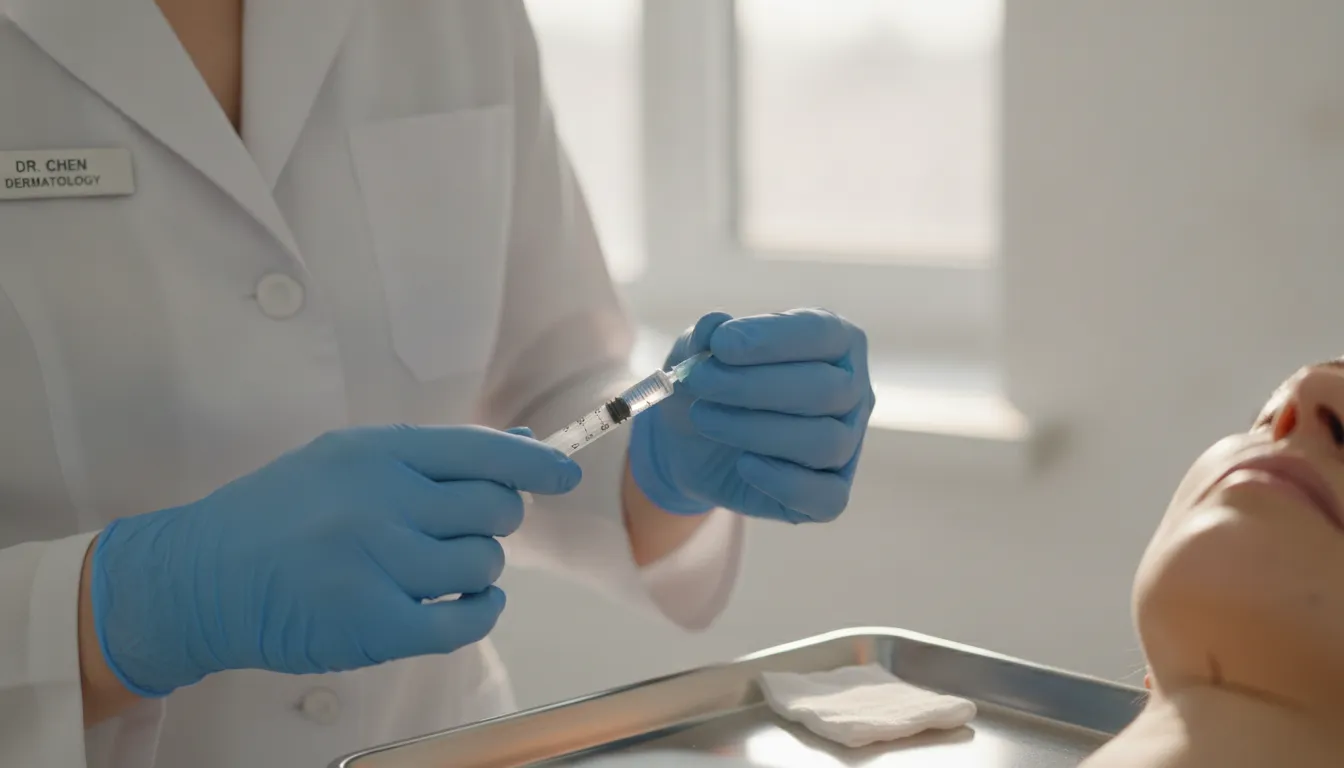
A typical neuromodulator treatment session at RewindMD is a quick, minimally invasive 15-minute procedure with virtually no downtime. Following a personalized clinical assessment, an expert injector administers the treatment using an ultra-fine needle, allowing you to return to your normal daily activities immediately.
Your session begins with a comprehensive, personalized assessment. Because dynamic wrinkle treatments require a nuanced understanding of facial anatomy, an experienced medical injector will evaluate your facial movements, muscle strength, and aesthetic preferences. This is essential because potency units are not interchangeable, and the exact dosage and placement must be carefully calculated for your unique face.
The injection itself is performed using an ultra-fine needle, making the procedure highly tolerable, with most patients describing it as a minor pinch. Standard treatment areas include the glabellar frown lines between the brows, horizontal forehead creases, and the delicate crow’s feet around the eyes. Some patients choose to pair their injections with other skin-resurfacing treatments such as clinical-grade chemical peels or microneedling with PRP for enhanced skin texture and tone. There is virtually no downtime required, allowing you to return to your daily routine immediately. Some patients may experience minor, temporary side effects such as localized injection site bruising. Mild redness, or a light headache, which typically resolve within a few hours to days. To support optimal healing, patients are advised to avoid strenuous exercise, direct heat, or lying flat for at least four hours following treatment.
The standardized steps for a treatment session at RewindMD include:
- Comprehensive Assessment: Your provider evaluates your facial anatomy, muscle movement, and goals to design a customized plan.
- Precise Mapping: The target injection points are identified and marked for accurate neuromodulator placement.
- Gentle Injection: Using an ultra-fine needle, the physician-led team administers Xeomin or Botox, causing minimal discomfort.
- Post-Care Guidance: Your injector reviews key instructions, such as avoiding exercise and lying flat for four hours.

Frequently Asked Questions About Xeomin and Botox
What is the difference between Xeomin and Botox?
The primary difference is formulation purity. Botox contains accessory complexing proteins that surround the active neurotoxin molecule. Xeomin undergoes a specialized manufacturing process that completely filters out these unnecessary proteins, leaving only the pure, active 150 kD neurotoxin molecule. This is why Xeomin is known as the “naked toxin.”
Which lasts longer, Xeomin or Botox?
Both Xeomin and Botox generally last between 3 to 4 months for most patients. The exact duration of either treatment depends on individual metabolic factors, muscle strength, and lifestyle habits. Regular maintenance sessions spaced 3 to 5 months apart can support continuous, smooth results.
Does Xeomin work faster than Botox?
While both products take a full 14 days to reveal their final, peak results, some patients notice that Xeomin begins to relax targeted muscles slightly faster. Xeomin’s initial effects may be visible within 2 to 3 days, compared to 3 to 5 days for Botox. Because the “naked” neurotoxin is immediately available to bind to muscle receptors without having to dissociate from accessory proteins first.
Is Xeomin cheaper than Botox?
The cost of Xeomin and Botox is highly comparable, with both typically priced between $12 and $17 per unit depending on the clinic and region. Because they are dosed on a generally equivalent 1:1 basis, the total cost for a treatment session is usually very similar. However, the total investment is always determined by the number of units required to achieve your personalized aesthetic goals.
Why would someone choose Xeomin over Botox?
Patients often choose Xeomin if they prefer a highly purified formulation free of accessory proteins or if they have developed a tolerance to Botox after years of consistent use. When Botox begins to lose its efficacy due to antibody development against its complexing proteins, switching to the purified “naked toxin” of Xeomin can restore excellent, reliable results.
Are Botox and Xeomin FDA-approved?
Yes, both Botox and Xeomin are fully FDA-approved prescription medications. Both have undergone rigorous clinical testing and have long-standing safety profiles for the treatment of dynamic facial wrinkles and lines when administered by a qualified medical professional.
Reclaim Your Confidence: Facial Rejuvenation at RewindMD
Choosing the right aesthetic injectable is not about finding a single “best” product. But rather finding the specific formulation that aligns with your biology, aesthetic goals, and wellness preferences. At RewindMD, we believe in a strategic, layered approach to facial rejuvenation.
By combining cosmetic injectables with medical-grade skincare and functional medicine, we help you achieve natural-looking, radiant results that reflect your health from the inside out. For instance, combining neuromodulators with dermal fillers like Sculptra or Radiesse can address both dynamic lines and age-related volume loss.
As a premier, physician-led wellness and aesthetic clinic in Encinitas, California, our team is dedicated to providing premium, educational, and patient-centered care. Whether you are interested in the highly purified benefits of Xeomin’s “naked toxin” or the proven track record of Botox, Dr. Scott Gillin and our expert medical team are here to guide you. We serve clients across North County San Diego, including Carlsbad, Del Mar, Solana Beach, Cardiff-by-the-Sea, Rancho Santa Fe, La Jolla, and Carmel Valley.
Ready to discover the ideal treatment for your skin? We invite you to Schedule Your Free Consultation with our clinical team today to receive a personalized, expert recommendation tailored to your unique anatomy and goals.
Disclaimer: The information provided in this article is for educational and informational purposes only and does not constitute medical advice or a professional diagnosis. Cosmetic treatments, including neuromodulators like Xeomin and Botox, are prescription medications with varying individual results and potential side effects. Always consult with a licensed healthcare provider, such as the physician-led team at RewindMD, for a professional evaluation and customized treatment recommendations before undergoing any procedure.