The science behind PRP for hair loss might sound complicated, but the concept is actually quite simple and elegant. It all comes down to using a concentrated dose of your body’s own natural healing agents. Your blood contains platelets, which are packed with powerful proteins called growth factors that are essential for tissue repair. The prp hair treatment process involves isolating these platelets from a small sample of your blood and delivering them directly to your scalp. This targeted approach provides your hair follicles with the precise tools they need to improve circulation, extend their growth phase, and produce thicker, healthier hair.
Key Takeaways
- PRP uses your body’s own healing power: The treatment harnesses growth factors from your own blood to stimulate weak hair follicles, making it a safe and natural way to encourage thicker, healthier hair.
- Expect a simple process with no real downtime: A typical PRP session takes about an hour and involves a blood draw and a series of quick scalp injections. You can return to your daily routine right after, with only mild, temporary sensitivity.
- Consistency is essential for the best results: Hair growth is a gradual process, with visible improvements often appearing after three to six months. Achieving and maintaining your results depends on completing an initial series of treatments and following a long-term maintenance plan.
PRP for Hair Loss: What Is It and How Does It Work?
If you’re exploring options for hair thinning, you’ve likely come across PRP. This treatment is gaining attention because it uses your body’s own natural healing abilities to encourage hair growth. Instead of relying on foreign substances or invasive procedures, PRP therapy taps into the regenerative power that’s already inside you. It’s a straightforward approach that works in harmony with your system to help rejuvenate dormant hair follicles and support a fuller, healthier head of hair.
The idea is simple: concentrate the healing components from your blood and deliver them directly to the areas where you need them most. This process helps create a better environment for hair to grow by improving circulation and providing essential proteins. For many people looking for a non-surgical solution, PRP offers a promising path forward in their hair restoration journey. It’s a method that feels both advanced and incredibly natural, which is why so many people find it appealing. It’s not about masking the problem, but about addressing it at the follicular level by giving your scalp the tools it needs to repair and regrow. Let’s get into exactly what it is and how it works.
Breaking Down Platelet-Rich Plasma
PRP stands for Platelet-Rich Plasma, which is a component of your own blood. Think of it as a golden liquid packed with healing potential. The process starts with a simple blood draw, just like you’d have at a routine check-up. That blood is then placed in a centrifuge, a machine that spins it at high speed to separate the different parts. This spinning action isolates the platelets and concentrates them into a plasma solution.
These platelets are the key. They are rich in proteins called growth factors, which are your body’s natural first responders for healing and tissue repair. By creating this concentrated plasma, we’re essentially making a super-charged healing serum from your own biological material.
How PRP Encourages Hair Growth
Once the platelet-rich plasma is prepared, it’s carefully injected into your scalp in the areas where hair is thinning. These powerful growth factors get right to work on your hair follicles. According to research from institutions like Johns Hopkins Medicine, the growth factors in PRP can help stimulate hair growth in a few key ways.
First, they improve blood supply to the follicles, ensuring they get the oxygen and nutrients they need to thrive. They also appear to extend the active growth phase of the hair cycle, which means your hair has more time to grow longer and stronger before shedding. The result is a gradual process of waking up dormant follicles and improving the overall health and thickness of your hair.
Preparing for Your PRP Hair Treatment
Getting ready for your PRP hair treatment is straightforward, but knowing what to expect can make the entire experience feel much smoother. It all starts with a conversation to make sure this is the right path for you, followed by a few simple steps to prepare for your appointment day. Let’s walk through everything you need to know so you can feel confident and excited about your treatment.
Your First Step: The Consultation
Before anything else, you’ll have a one-on-one consultation with a physician. This is your time to ask questions and our time to get to know you and your hair goals. We’ll discuss your hair loss history and examine your scalp to determine if you’re a good candidate. PRP works best for people with thinning hair or who have recently started noticing hair loss, rather than for areas that are completely bald. During this meeting, we’ll explain our specific process for preparing and administering your PRP. This initial chat is the most important step in creating a personalized hair restoration plan that’s right for you.
How to Get Ready for Your Appointment
Once you’re scheduled, preparing for your PRP session is simple. We recommend arriving with a clean scalp, free of any hair products. On the day of your treatment, we’ll start by drawing a small amount of blood from your arm, just like a standard blood test. That blood is then placed in a centrifuge, a machine that spins it rapidly to separate the platelet-rich plasma from the other components. This creates the concentrated golden serum that will be used for your treatment. To ensure you’re comfortable, we’ll apply a topical numbing cream to your scalp before the injections begin.
Let’s Talk About Comfort and Safety
It’s completely normal to have questions about the safety and comfort of any new treatment. One of the biggest advantages of PRP is that it’s considered very safe because it uses your own blood. This eliminates any risk of allergic reaction or transmissible disease. During the procedure, you might feel some mild discomfort from the injections, which are done with a very thin needle. The most common side effects are temporary and mild, including some soreness, redness, or swelling at the injection sites. These typically resolve on their own within a day or two, and we’ll give you clear aftercare instructions to help you manage them.
Your PRP Treatment: A Step-by-Step Guide
Knowing what to expect can make any new treatment feel more comfortable and straightforward. The great news is that the PRP process is simple, quick, and happens right here in our clinic. We handle every step with the utmost care to ensure you feel at ease from start to finish. Let’s walk through exactly what your appointment will look like, so you can feel confident and prepared.
Step 1: The Blood Draw and Preparation
Your PRP session begins with a simple blood draw from your arm, much like any routine lab test. We only need a small amount of blood to work with. Next, we place the vial into a special machine called a centrifuge. This device spins the blood at a high speed, a process that neatly separates the platelet-rich plasma from the other components. This concentrated, golden-hued plasma is packed with the growth factors that will be used to stimulate your hair follicles. It’s a completely natural process that uses your body’s own powerful healing properties.
Step 2: Preparing and Numbing Your Scalp
Your comfort is our priority. Once your personalized PRP is ready, we’ll prepare your scalp for the treatment. First, we gently and thoroughly cleanse the target areas to ensure they are sterile. To make the experience as comfortable as possible, we then apply a topical numbing cream to your scalp. This cream takes a little time to work its magic, but it helps minimize any sensation from the injections, allowing you to relax during the procedure.
Step 3: The Injection Process
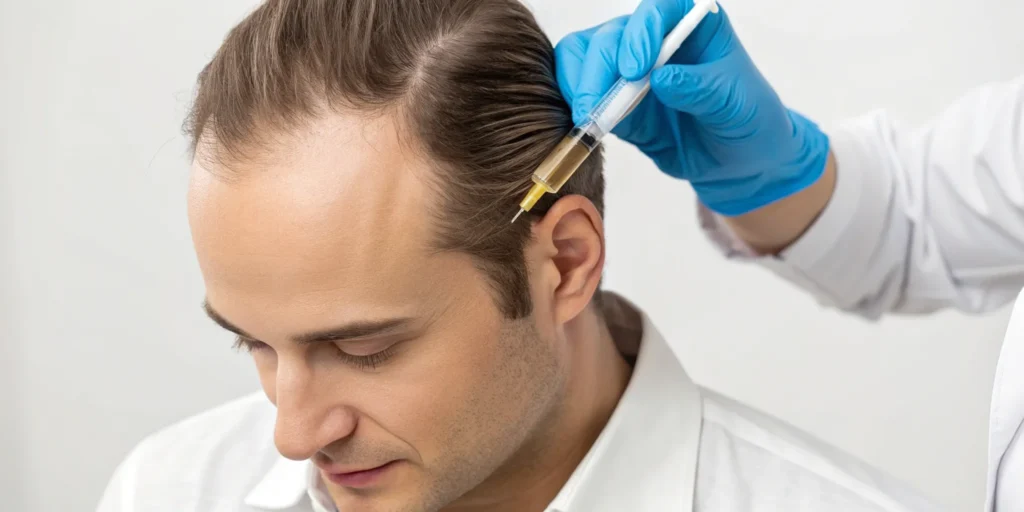
After your scalp is numb, our physician will begin the treatment. Using a very fine needle, we carefully inject your custom PRP solution directly into the areas of your scalp where hair thinning has occurred. The injections are shallow and strategically placed to deliver the growth factors right to the hair follicles that need them most. This part of the process is quite quick, as we work precisely to ensure an effective and efficient treatment.
How Long Each Session Takes
From the initial blood draw to the final injection, the entire PRP session typically takes about an hour. It’s a treatment you can easily fit into your day. For the best results, PRP isn’t a one-time fix. We usually recommend an initial series of three treatments, spaced about four to six weeks apart. This schedule helps build on your progress and gives your hair follicles the consistent stimulation they need for optimal hair restoration. After your initial series, we’ll create a maintenance plan tailored just for you.
What to Expect During and After Your Session
Knowing what’s coming is half the battle, right? It can make any new experience feel much less intimidating. The PRP process is very straightforward, and we’re here to guide you through every step, from the moment you sit in the chair to the days following your treatment. Our goal is to make sure you feel informed, comfortable, and confident in your care. Let’s walk through what you can expect during your session and what your aftercare will look like.
Staying Comfortable During Treatment
Your comfort is our top priority. Once we’ve prepared the platelet-rich plasma from your blood draw, we’ll get your scalp ready for the treatment. First, we’ll thoroughly clean the area. Then, to make the experience as comfortable as possible, we’ll apply a topical numbing cream. This helps minimize any sensation from the injections. You might feel a little pressure, but the numbing cream does a great job of keeping you comfortable while the growth factors are carefully injected into the targeted areas of your scalp.
Immediately After Your Appointment
One of the best parts about PRP is that there’s virtually no downtime. You can typically head back to your daily routine right after you leave our clinic. Your scalp might feel a little tender or sensitive for a few hours, and you may notice some slight redness for a day or two. This is completely normal and a sign that the healing process has begun. Most people find these effects are mild and resolve quickly on their own, so you can get back to your life without skipping a beat.
Your Aftercare Plan for the Best Results
Following a few simple guidelines after your treatment will help you get the best possible results from your hair restoration journey. For the first 48 hours, it’s best to avoid hot showers, saunas, or steam rooms. Stick to lukewarm water when you wash your hair, but wait at least 24 hours before your first wash. When you do shampoo, be gentle with your scalp for the first three days. If you experience any swelling or discomfort, a cold compress can provide some relief. These small steps protect your scalp and support the growth factors as they get to work.
When Will You See Results from PRP?
One of the most common questions we hear is, “How long until I see a change?” It’s completely understandable. You’re investing in yourself, and you’re excited about the outcome. While PRP isn’t an overnight fix, the results are worth the wait. Think of it as nurturing your hair back to health from the inside out. The process is gradual, but the changes are real and lasting. Let’s walk through what you can expect.
A Realistic Timeline for Hair Growth
Patience is your best friend during this process. While everyone’s body responds differently, you can generally expect to see the first subtle signs of improvement within six to eight weeks. This might look like your existing hair feeling stronger or having a healthier shine. More noticeable changes, like improved thickness and better scalp coverage, typically appear around the three to four-month mark. The most significant and satisfying results from your PRP hair restoration usually become visible between six and nine months as your hair follicles complete their growth cycles.
Your Treatment and Maintenance Schedule
Consistency is key to achieving the best possible outcome. Your initial treatment plan will likely involve a series of three to five sessions, spaced about a month apart. This schedule allows us to build on your progress and give your hair follicles the consistent stimulation they need to thrive. After you’ve completed this initial series and are happy with your results, we’ll create a maintenance plan. Most people find that a follow-up treatment every four to six months is perfect for maintaining their fuller, healthier hair for the long term.
What Factors Influence Your Results?
Your results depend on a few personal factors, which is why a consultation is so important. PRP tends to be most effective for individuals with thinning hair or those who have started experiencing hair loss more recently, rather than those with areas of complete baldness. Your unique biology also plays a significant role. For example, the natural concentration of platelets in your blood can influence your outcome. Understanding these factors helps us set realistic expectations and confirm if PRP is the right path for you on your journey to reclaiming your confidence.
Is PRP Hair Treatment Right for You?
Deciding if a treatment is the right fit for you is the most important step. While PRP is a powerful tool for hair restoration, it’s not a one-size-fits-all solution. Your specific type of hair loss, your overall health, and your expectations all play a role in determining if you’re a good candidate. The best way to get a clear answer is by talking with a qualified physician who can assess your individual situation. However, understanding the general guidelines can help you go into that conversation feeling prepared and informed. Let’s walk through who typically sees the best results and what health factors you should keep in mind.
Who Benefits Most from PRP?
PRP works best for people who are dealing with thinning hair or are in the early to moderate stages of hair loss. Think of it as a way to strengthen and reactivate hair follicles that are still viable but have become weak. If an area is completely bald, the follicles may no longer be active, making PRP less effective. It’s a fantastic option for both men and women who have noticed their hair becoming less dense or have seen more shedding than usual. The goal is to intervene before the hair loss becomes too advanced, giving your existing follicles the support they need to produce thicker, healthier hair. Our hair restoration programs are designed to address these specific concerns.
Important Health and Safety Considerations
One of the biggest advantages of PRP is its safety profile. Because the treatment uses a concentrate made from your own blood, the risk of an allergic reaction or infection is extremely low. Most people experience only minor, temporary side effects like some tenderness, swelling, or redness at the injection sites, which usually resolves within a day or two. That said, PRP isn’t suitable for everyone. You should not get this treatment if you are pregnant, breastfeeding, or have certain medical conditions like cancer. A thorough consultation is essential to review your medical history and ensure you can proceed safely and confidently.
Pairing PRP with Other Hair Restoration Treatments
For many people, PRP delivers the best results when it’s part of a comprehensive treatment plan. It can be combined with other therapies to address hair loss from multiple angles. For example, if your hair thinning is linked to an underlying issue, addressing that root cause is key. This is why a holistic approach that considers your overall well-being is so important. Our team often looks at hormones and functional wellness to get a complete picture of your health. Remember that consistency is crucial; any benefits you see will last only as long as you continue with your recommended maintenance treatments.
Related Articles
- PRP for Hair Loss: Your 3-Month Before & After Guide
- How Effective Is PRP for Hair Loss, Really?
- The Cost of PRP Hair Restoration Explained
Frequently Asked Questions
Does the PRP injection process hurt? Your comfort is our top priority, which is why we apply a strong topical numbing cream to your scalp before we begin. While you might feel a little bit of pressure during the injections, the numbing cream does an excellent job of minimizing any real discomfort. Most people find the process very manageable.
How many sessions will I need to see a difference? PRP works best as a series of treatments. We typically recommend starting with three to five sessions, spaced about a month apart. This schedule allows the growth factors to build on each other and consistently stimulate your hair follicles. After this initial series, we’ll work with you to create a simple maintenance plan to keep your hair looking its best.
What does “no downtime” really mean for my schedule? It means you can get right back to your day after your appointment. You can drive, go back to work, or run errands. We just ask that you take it easy for the first 24 to 48 hours. This means avoiding intense exercise, saunas, or washing your hair with hot water. Your scalp might be a little pink and tender, but it shouldn’t stop you from your normal routine.
Are the results from PRP permanent? PRP provides long-lasting results, but it isn’t a permanent cure for the conditions that cause hair loss. Think of it as a way to manage and improve your hair’s health over time. To maintain your fuller, thicker hair, you will need periodic follow-up treatments. Most people find that a session every four to six months is enough to sustain their results.
Who shouldn’t get PRP for hair loss? While PRP is very safe for most people, it isn’t the right choice for everyone. We do not perform this treatment on individuals who are pregnant or breastfeeding. It is also not recommended for those with certain medical conditions, such as cancer. This is why your initial consultation is so important; it allows us to review your health history and confirm that you are a great candidate.