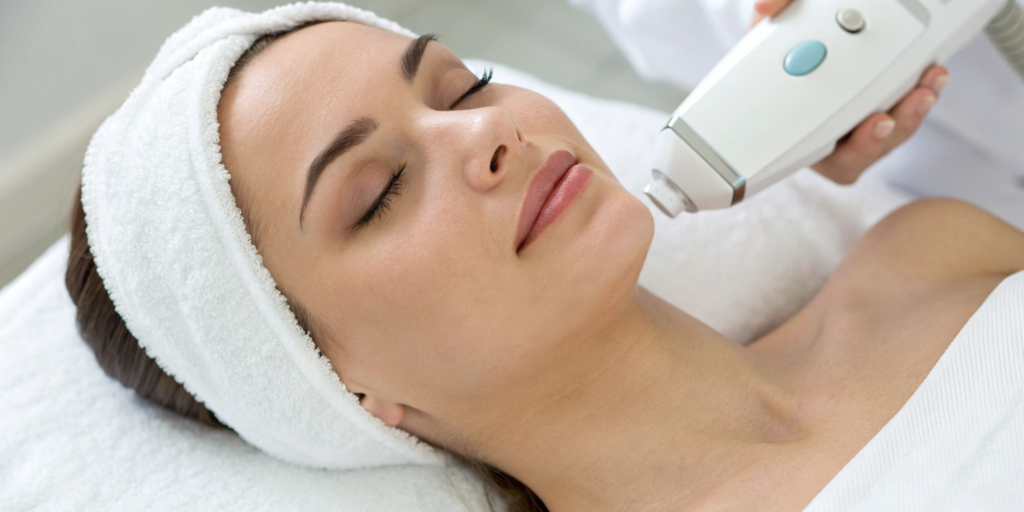
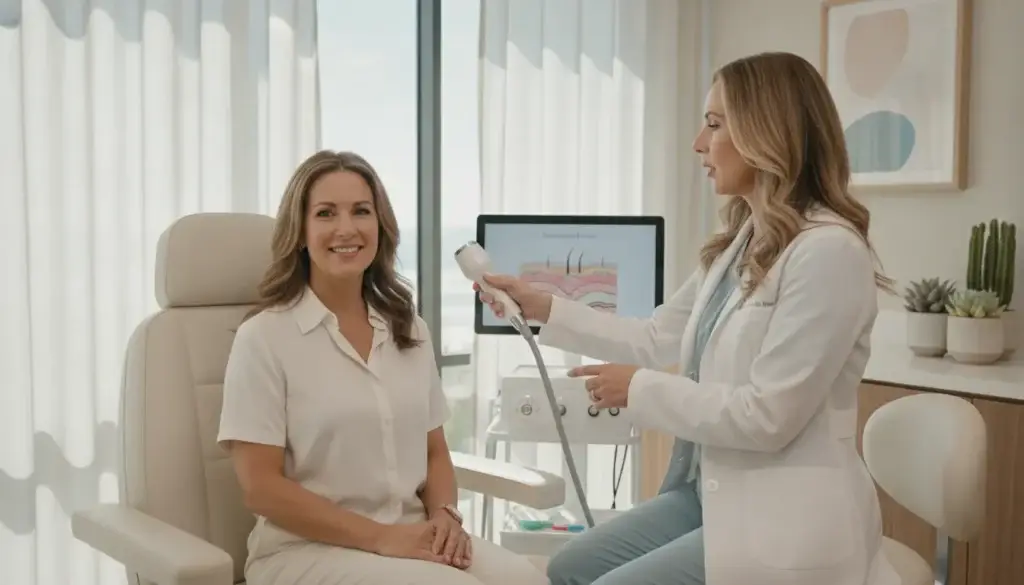
When your reflection looks more tired than you feel, surgery is not the only option worth discussing. Many adults in North County San Diego want a refreshed appearance while preserving the features that make them look like themselves.
A Fotona 4D laser facelift San Diego treatment is a non-surgical facial rejuvenation approach that combines four complementary laser modes. The treatment works at different tissue depths, including an intraoral step, to support collagen remodeling and address concerns such as fine lines, uneven texture, and mild laxity. It is not the same as a surgical facelift, and individual treatment plans, recovery experiences, and results vary.
Understanding what each step is designed to do can help you decide whether this approach fits your goals. The best place to begin is with a clear explanation of the treatment itself.
Fotona 4d Laser Facelift San Diego: What is a Fotona 4D laser facelift?
A Fotona 4D laser facelift is a non-surgical facial rejuvenation protocol that combines four laser modes and two wavelengths. The modes are used at different tissue depths, allowing a trained provider to build a layered treatment plan rather than focusing only on the skin’s surface.
Four complementary treatment modes
The protocol commonly begins with SmoothLiftin, an intraoral step designed to deliver controlled energy from inside the mouth. FRAC3 targets selected areas within deeper layers, while PIANO delivers controlled bulk heating externally. The SupErficial step addresses the outermost layer as part of the overall plan.
Not every patient receives identical settings or intensity. A provider should select treatment areas and parameters after assessing the patient’s skin, medical history, concerns, and tolerance for recovery.
How a laser facelift differs from surgery
The phrase “laser facelift” describes a non-surgical rejuvenation approach. It does not mean the treatment can reposition deeper tissues or reproduce the degree of change possible with a surgical facelift. Instead, Fotona 4D is designed to support collagen remodeling and improve the appearance of concerns such as mild laxity, fine lines, and uneven texture.
People often consider this option when they prefer gradual, natural-looking changes and a recovery profile that may be easier to fit into daily life. Recovery and outcomes still vary. A consultation is the best way to compare laser treatment with other facial rejuvenation options.
How does the four-dimensional treatment approach work?
The “4D” name refers to four complementary modes used during a Fotona protocol. Together, they allow a provider to address tissue from inside the mouth and across different external depths. The exact sequence, settings, and areas treated should be tailored to the patient.
A typical Fotona 4D appointment
- Start with a consultation and skin assessment. The clinical team reviews your goals, history, current skin condition, previous treatments, and any factors that could affect safety or recovery.
- Use SmoothLiftin inside the mouth. This intraoral mode delivers controlled energy to tissue from the inner surface and is commonly discussed for the area around the mouth and lower face.
- Apply FRAC3 to selected external areas. This mode targets small regions within deeper tissue as part of the remodeling process.
- Deliver PIANO bulk heating. PIANO is designed to warm tissue externally in a controlled manner. Your provider monitors comfort and response throughout this step.
- Finish with SupErficial treatment when appropriate. This lighter surface-focused step may be included to address visible texture and complete the personalized protocol.
Why the layered approach matters
Visible aging can involve the surface, collagen-supporting tissue, and broader facial structure. Fotona 4D addresses selected layers with different laser modes, but it does not replace surgical repositioning. This distinction is important when setting expectations.
After treatment, collagen remodeling may continue gradually. Some plans include multiple appointments, but the appropriate number and spacing vary. A physician-led assessment should determine whether this protocol, another laser skin resurfacing approach, or a different option best fits your goals.
What aesthetic goals may Fotona 4D support?
Fotona 4D is designed for people who want a refreshed appearance without surgery. Because the protocol combines multiple modes, a provider can address several related concerns within one personalized plan. The goal is typically subtle improvement rather than a dramatic change in facial structure.
Smoother-looking texture and more even tone
The superficial portion of the treatment may help improve the look of rough texture, enlarged pores, and visible sun-related changes. Patients interested in this aspect of treatment may also find RewindMD’s laser skin resurfacing guide useful when comparing approaches.
Not every discoloration or textural concern should be treated the same way. A consultation helps the clinical team assess your skin, discuss your history, and determine whether a laser-based plan is appropriate.
Support for firmness and elasticity
Different Fotona modes deliver controlled laser energy at different depths. This process is designed to support collagen remodeling over time, which may improve the appearance of mild laxity around areas such as the cheeks and jawline. Changes generally develop gradually rather than appearing as an instant lift.
Softening the appearance of fine lines
Patients may also consider Fotona 4D for fine lines around the mouth, cheeks, or eyes. The intraoral step is one feature that distinguishes the protocol, because it treats tissue from inside the mouth as part of a broader facial rejuvenation plan.
A laser treatment cannot reposition deeper facial structures the way surgery can. Your provider should explain the realistic range of improvement for your concerns and discuss other options when they would better match your goals.
Who may be a candidate for Fotona 4D?
Candidacy depends on more than age or skin type. Fotona 4D may be worth discussing if you want a non-surgical approach to early or moderate visible aging and understand that results vary. A personalized assessment is essential before treatment.
Goals that may align with the treatment
People commonly ask about Fotona 4D when they notice fine lines, mild laxity, uneven texture, or a complexion that looks less vibrant than it once did. It may suit someone who prefers gradual, natural-looking changes and cannot accommodate the recovery associated with surgery.
- Fine lines around the eyes or mouth
- Mild loss of firmness along the cheeks or jawline
- Uneven texture or visible pores
- A preference for a non-surgical treatment plan
Health factors your provider should review
A thorough consultation should cover your medical history, medications, previous procedures, current skin condition, and tendency toward cold sores or pigmentation changes. Tell your provider about active irritation, infection, recent sun exposure, and any upcoming events that affect your recovery timeline. This information helps the clinical team decide whether to treat, adjust the plan, or recommend waiting.
When another option may be more appropriate
Fotona 4D does not replace a surgical facelift. Someone seeking a major change in pronounced laxity may be better served by a surgical consultation. Another laser protocol or a different treatment category may also make more sense when the main concern is deep scarring. A specific pigment condition, or another issue that needs targeted care.
RewindMD’s physician-led team evaluates these factors as part of an individualized facial rejuvenation assessment. The consultation is also the right time to discuss expected treatment frequency, limitations, and aftercare for your skin.
What should you expect during treatment and recovery?
A Fotona 4D appointment begins with a review of the plan, your skin’s current condition, and any changes since your consultation. The provider then moves through the selected laser modes. Settings and treatment areas should be individualized rather than treated as a standard recipe.
The treatment experience
One portion is performed inside the mouth to deliver controlled energy to tissue from the inner surface. The remaining modes are applied externally at different depths. Sensations can include warmth or brief heat, but comfort varies from person to person. Tell your provider what you feel throughout the appointment so adjustments can be made when appropriate.
Immediate aftercare and recovery
Temporary redness, warmth, sensitivity, or mild swelling may occur after laser treatment. The intensity and duration depend on the settings used, the treatment areas, and your individual response. Follow the aftercare instructions given by your clinical team rather than relying on a generic timeline.
Gentle skincare and diligent sun protection are commonly important after facial laser treatment, especially in sunny San Diego. Your provider may ask you to pause certain active products or avoid heat and strenuous activity for a period of time. Contact the clinic if you have symptoms that concern you.
Gradual changes and follow-up
Some patients notice an early refreshed appearance, while collagen remodeling develops more gradually. Your plan may involve a series of visits or future maintenance, depending on your goals and response. Results and treatment schedules vary, so the number of sessions should be decided during consultation and reassessed over time.
For a broader look at laser approaches and recovery questions, read RewindMD’s laser skin resurfacing guide.
How does Fotona 4D compare with other rejuvenation options?
No single rejuvenation treatment is best for everyone. The right choice depends on the degree of change you want, your skin concerns, medical history, comfort with recovery, and preference for surgical or non-surgical care.
Different tools for different goals
Fotona 4D uses laser energy and includes both intraoral and external treatment steps. A surgical facelift repositions deeper tissues and can address more pronounced laxity, but it also involves surgery and a substantially different recovery. Radiofrequency microneedling creates controlled microchannels while delivering radiofrequency energy and may be considered for concerns such as texture or scarring.
| Option | General approach | Common discussion points |
|---|---|---|
| Fotona 4D | Multi-mode laser treatment | Non-surgical plan, gradual changes, individualized recovery |
| Surgical facelift | Surgical repositioning of facial tissues | More pronounced structural change, anesthesia, surgical recovery |
| Radiofrequency microneedling | Needles plus radiofrequency energy | Texture-focused goals, temporary redness, treatment series may be recommended |
Questions to guide the comparison
Ask what each option can reasonably address, what it cannot change, how recovery could affect your schedule, and why a provider recommends it for your anatomy and goals. A thoughtful recommendation should also account for previous treatments, skin condition, and your comfort with maintenance.
RewindMD’s facial rejuvenation and anti-aging service hub offers a starting point for exploring how different treatments may fit within a personalized plan.
Choosing a Fotona 4D laser facelift in San Diego
Aesthetic laser treatment is highly dependent on assessment, settings, technique, and aftercare. For patients in Encinitas and across North County San Diego, choosing a provider should involve more than finding the closest appointment. Look for a team that listens carefully, explains alternatives, and sets realistic expectations.
Why a physician-led consultation matters
RewindMD uses a physician-led approach to facial rejuvenation. A consultation gives the team an opportunity to review your medical history, evaluate the concern you want to address, and determine whether Fotona 4D is appropriate. It also creates space to discuss how the treatment fits into your broader wellness and skincare priorities.
A good consultation should feel educational, not pressured. You should understand the proposed treatment areas, expected sensations, recovery considerations, potential risks, alternatives, and how the team will respond if your skin needs a different plan.
Questions to ask before treatment
- Why do you recommend Fotona 4D for my specific concerns?
- Which modes and treatment areas might be included in my plan?
- What short-term skin reactions should I prepare for?
- What results are realistic, and what can this treatment not change?
- How will you personalize aftercare and follow-up?
Patients researching a Fotona 4D laser facelift San Diego treatment can begin with RewindMD’s facial rejuvenation and anti-aging services. The team can then provide an individualized assessment at the Encinitas clinic.
Frequently asked questions about Fotona 4D
How much does a Fotona 4D facelift cost in San Diego?
Cost varies based on the treatment plan, areas addressed, and number of sessions recommended. RewindMD does not publish a one-size-fits-all price in the available service information. A consultation is the appropriate time to receive an individualized recommendation and current pricing.
How long do Fotona 4D results last?
Longevity varies because skin condition, age, lifestyle, treatment settings, and ongoing care all influence the response. Natural aging continues after treatment. Your provider can discuss realistic expectations and whether future maintenance may support your goals.
Is Fotona 4D better than radiofrequency microneedling?
Neither treatment is universally better. They deliver energy differently and may be selected for different concerns. A provider should compare the options based on your skin, goals, tolerance for recovery, and medical history.
How many Fotona 4D treatments might I need?
The number of treatments varies by patient and goal. Some plans may involve a series, while others may focus on a different approach altogether. Your clinical team should recommend a schedule only after evaluating your skin and reviewing your response over time.
Explore a personalized facial rejuvenation plan
If you are considering a Fotona 4D laser facelift in San Diego, a consultation can help you understand whether the treatment aligns with your skin, goals, and schedule. RewindMD’s physician-led team in Encinitas can review your concerns, explain suitable options, and set realistic expectations without a one-size-fits-all recommendation.
Ready to schedule a personalized consultation? Call 858-877-4179 to book your visit at RewindMD.