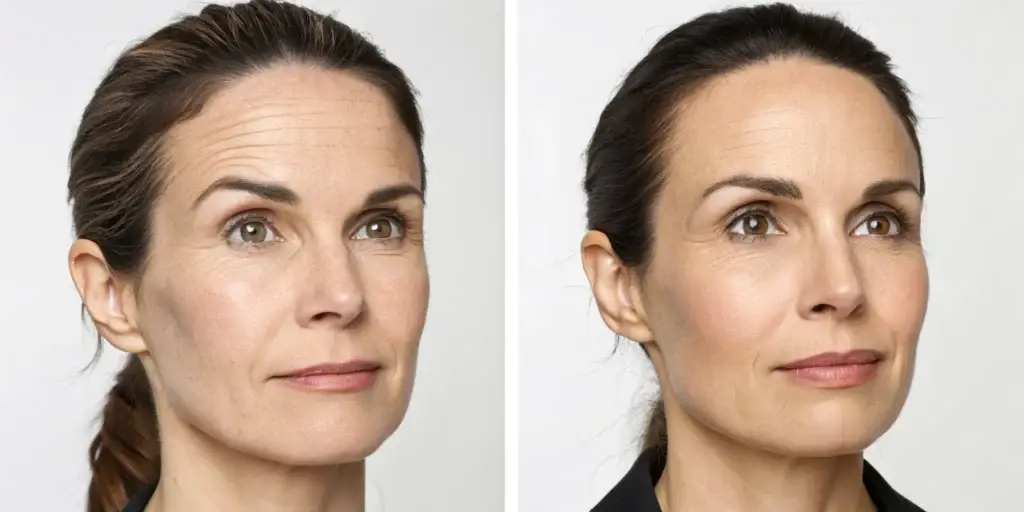
When you think of Botox, does a “frozen” or expressionless face come to mind? Let’s clear that up right away. The goal of a great Botox treatment isn’t to erase your ability to show emotion; it’s to soften the deep-set lines that stick around even when your face is at rest. When done by a skilled professional, the result is a natural, well-rested appearance. The proof is in the thousands of deep wrinkles botox before and after forehead photos that show people who simply look like refreshed versions of themselves. This article will break down the science, bust the common myths, and walk you through everything you need to know about achieving a smoother, more confident look.
Key Takeaways
- Botox smooths wrinkles by relaxing muscles: Instead of filling lines, Botox temporarily stops the muscle movements that create forehead creases, giving your skin a chance to soften. You can expect to see the full, natural-looking effect in about two weeks.
- Your provider choice dictates your results: The skill of your injector is the most important factor for achieving a natural look and ensuring safety. Always choose a qualified medical professional who provides a thorough consultation to understand your goals.
- Consistency is key for long-term smoothness: Botox results typically last three to four months. Scheduling regular appointments helps manage existing lines and prevent new ones from setting in, keeping your forehead looking refreshed.
How Does Botox Work on Deep Forehead Wrinkles?
If you’ve ever wondered how a few quick injections can smooth out deep-set lines, you’re not alone. The magic of Botox isn’t about filling in wrinkles; it’s about relaxing the muscles that cause them in the first place. Think about the expressions you make every day. When you raise your eyebrows in surprise or furrow your brow in concentration, the frontalis muscle on your forehead contracts, folding the skin. Over many years, these repeated folds create permanent creases, much like a piece of paper that’s been folded over and over.
Botox works by temporarily blocking the nerve signals that tell this specific muscle to contract. By pressing pause on those repetitive movements, you give the overlying skin a chance to relax and smooth out. This results in a softer, significantly softened, and more rested appearance. The treatment itself is quick, often taking just a few minutes in the office. You’ll start to see results within a few days, with the full effect becoming visible in about two weeks. It’s a targeted approach that addresses the root cause of dynamic wrinkles, making it one of the most effective facial rejuvenation and anti-aging treatments available for achieving a refreshed look.
The Science Behind the Smooth
So, what’s happening beneath the surface? Botox is a purified protein that, when injected in small, precise amounts, interrupts the communication between your nerves and muscles. It specifically targets the frontalis muscle, which is responsible for lifting your eyebrows. By relaxing this muscle, Botox softens the horizontal lines that form across your forehead. A skilled injector ensures the application is strategic, so you can still show expression without deepening those lines. The goal is a natural, refreshed look, not a “frozen” one. This precision is key to getting results that look like you, only more rested.
Why Forehead Wrinkles Form in the First Place
Forehead wrinkles don’t just appear overnight. They develop from a combination of factors. The most significant cause is repeated facial movements. Every time you express surprise, concern, or concentration, your forehead muscles contract. Over a lifetime, these movements create dynamic wrinkles that eventually stick around even when your face is at rest. Other factors accelerate this process. Natural aging causes your skin to lose collagen and elasticity, making it less able to bounce back. Sun exposure also plays a huge role, breaking down skin-firming fibers. This is why a comprehensive approach to skin treatments often includes both preventative care and targeted solutions like Botox.
What Results Can You Expect from Forehead Botox?
One of the most exciting parts of getting Botox is seeing the transformation. While it’s not an overnight change, the results are definitely worth the short wait. Forehead Botox works by relaxing the frontalis muscle, which is the muscle responsible for those horizontal lines that appear when you raise your eyebrows. By softening this muscle’s movement, the skin on top becomes smoother, giving you a more refreshed and rested appearance. It’s a targeted approach that addresses the cause of the wrinkle, not just the wrinkle itself.
Understanding the timeline and what a realistic outcome looks like will help you fully appreciate the results of your treatment. The goal is never to create a “frozen” or expressionless look. Instead, a skilled provider aims for a natural-looking result where you still look like yourself, just with softer lines and a smoother canvas. It’s about looking well-rested and vibrant, not like you’ve had work done. Let’s walk through what you can expect to see in the days and weeks after your appointment so you know exactly what to look for as your results develop.
Your Results Timeline
Patience is key, but you won’t have to wait long to see a change. The effects of Botox appear gradually as the product settles in and begins to work. Most people start to notice a subtle difference within the first one to three days as the neurotoxin begins to relax the targeted muscle. Around the one-week mark, you’ll likely see a more noticeable smoothing of your forehead lines. The grand reveal happens at about two weeks, which is when the full effect of your facial rejuvenation treatment is typically visible. At this point, your forehead will look significantly smoother, and those deep-set wrinkles will be beautifully softened.
How to Read Before-and-After Photos
Before-and-after photos are a fantastic way to visualize potential results, but it’s important to know how to look at them. When you browse galleries, like the ones on the official BOTOX® Cosmetic website, notice that the “after” photos are usually taken around 30 days post-treatment to show the final, settled result. Look for photos with consistent lighting and angles to ensure you’re seeing an accurate comparison. The goal isn’t a completely motionless face, but a natural-looking reduction in lines. A great “after” photo will show a smoother forehead while still allowing for some gentle, natural expression.
Setting Realistic Expectations
It’s important to remember that Botox is designed to soften wrinkles, not erase every single line from your face. A good treatment should never leave you with a “frozen” look. While the injected muscle won’t be able to contract as strongly, the goal is for the treated wrinkles to relax and soften, giving you a natural and refreshed appearance. Botox is most effective on dynamic wrinkles, which are the lines that appear with movement. Deeper, static lines that are present even at rest may become much less noticeable but might not disappear completely with Botox alone. Sometimes, combining treatments can provide even better skin-smoothing results.
How Long Do Botox Results Last?
One of the most common questions about Botox is, “How long will my smooth forehead last?” Generally, you can expect the results of your treatment to last between three and four months. For some people, especially after consistent treatments, those results might even extend up to six months. The duration really depends on your unique body and a few key factors. It’s not like a switch flips off one day; you’ll notice a gradual return of muscle movement over several weeks, which is your cue to start thinking about your next appointment.
Think of your first few appointments as a way for your provider to understand how your muscles respond to the treatment. Over time, regular Botox injections can actually help train your forehead muscles to relax. This means that with a consistent schedule, you may find that the effects last longer, and the wrinkles that appear between sessions are less severe. The goal is to maintain a natural, refreshed look, and understanding the timeline is the first step in achieving that. It’s all about creating a smooth, sustainable routine that works for you and keeps you feeling confident.
Factors That Influence Longevity
Several things can affect how long your Botox results stick around. The depth of your wrinkles is a big one. If you have very deep, etched-in lines, Botox will soften them significantly, but your provider might also suggest pairing it with dermal fillers for the smoothest possible outcome. Your metabolism and lifestyle also play a part; if you’re very active or have a faster metabolism, your body may process the product more quickly.
Most importantly, the skill of your injector is crucial. An experienced, qualified professional knows exactly how much product to use and where to place it for optimal, long-lasting results. Choosing the right provider for your facial rejuvenation not only ensures a better outcome but also minimizes the risk of complications like unevenness or a heavy feeling in your brows.
Creating Your Maintenance Schedule
To keep your forehead looking smooth and prevent deep lines from returning, consistency is key. Most providers recommend scheduling your follow-up treatments every three to four months (or about every 12 to 16 weeks). Sticking to this schedule helps you stay ahead of the wrinkles, rather than waiting for them to fully reappear before your next appointment.
Your provider will work with you to create a personalized maintenance plan tailored to your goals and how your muscles respond. This isn’t a one-size-fits-all treatment. By staying on track with your appointments, you’re investing in a long-term strategy that not only treats existing lines but also helps prevent new ones from forming.
How to Choose the Right Botox Provider
When it comes to Botox, the person holding the syringe matters far more than the product itself. The best results come from a deep understanding of facial anatomy, a precise technique, and an aesthetic eye for creating natural, balanced outcomes. A great injector knows the goal isn’t to erase every line, but to soften them in a way that leaves you looking refreshed, not frozen. Choosing a qualified provider is the single most important step to ensure you love your results and stay safe. Focusing on a physician-led clinic ensures you’re under the care of medical professionals who prioritize your health and aesthetic goals.
Why Experience and Credentials Matter
Getting natural-looking results and avoiding complications like a droopy brow all comes down to the skill of your injector. An experienced provider understands how Botox behaves in different facial muscles, knowing exactly where to place the product and how much to use for your specific muscle patterns. When researching providers, look for credentials like MD, NP, or PA, and ask about their specific training in cosmetic injectables. You want someone who dedicates their practice to facial rejuvenation and anti-aging and has a portfolio that reflects the aesthetic you’re hoping to achieve.
Questions to Ask at Your Consultation
Your consultation is your opportunity to interview your potential provider and feel comfortable with your choice. A great provider will welcome your questions and answer them thoroughly.
Here are a few key questions to have ready:
- How long have you been performing Botox injections?
- What is your aesthetic philosophy for using wrinkle relaxers?
- Can I see before-and-after photos of your patients?
- What are the potential risks and side effects?
Be open about your goals and medical history. A comprehensive approach that considers your overall functional wellness is crucial for a safe and effective treatment.
What a Safe Consultation Process Looks Like
A thorough, unhurried consultation is the hallmark of a reputable clinic. Before any injections, you should sit down with a medical professional to discuss your goals. They should analyze your facial expressions, explain their recommended treatment plan, and walk you through what to expect. They will also conduct a full review of your medical history to ensure you are a good candidate. If a provider seems rushed or dismisses your concerns, consider it a red flag. A safe process is built on trust, transparency, and a shared understanding of the desired outcome.
Are There Risks or Side Effects with Forehead Botox?
It’s completely normal to have questions about the safety of any cosmetic treatment. The good news is that Botox has a long-standing safety record, especially when administered by a qualified medical professional. While side effects are possible, serious ones are quite rare. The key to a safe and successful treatment is choosing an experienced provider who understands facial anatomy and proper injection techniques.
Let’s walk through the most common side effects, what to do if you have concerns after your appointment, and clear up some of the biggest myths floating around about Botox. Understanding these points will help you feel confident and prepared as you consider your options for facial rejuvenation. Your safety and peace of mind are the top priorities, so getting informed is the perfect first step.
Common Side Effects and How to Minimize Them
After your injections, you might notice some minor, temporary side effects around the treatment area. This can include slight redness, swelling, or bruising. These effects are typically mild and resolve on their own within a few hours to a couple of days. To minimize bruising, it’s a good idea to avoid blood-thinning medications and supplements, like aspirin or fish oil, for about a week before your appointment (always check with your doctor first).
More significant side effects, like a droopy eyelid or uneven brows, are very uncommon and almost always linked to injector error. This is why selecting a skilled, physician-led clinic is so important. An expert injector knows precisely where to place the Botox to achieve smooth, natural-looking results while keeping you safe.
When to Call Your Provider
Your provider should give you clear aftercare instructions, but it’s important to listen to your body. If you experience anything that feels unusual or concerning after your treatment, don’t hesitate to contact your provider right away. This could include significant swelling, any changes to your vision, a severe headache, or any signs of an allergic reaction. While these instances are extremely rare, your provider is your best resource. A reputable clinic will always be available to answer your questions and ensure your recovery is going smoothly. Open communication is a key part of a safe treatment process.
Common Botox Myths, Busted
You’ve probably heard the one about Botox “freezing” your face. Let’s clear that up: Botox doesn’t freeze your face, it simply relaxes the specific muscles that cause wrinkles. When done correctly, you’ll still be able to show a full range of emotions, just without the deep creases. Another common myth is that Botox is only for deep-set wrinkles. In reality, it’s an excellent preventative treatment for many people. By starting before lines become deeply etched, you can keep your skin smoother for longer. It’s one of the most effective tools we have for a variety of anti-aging solutions.
Your Botox Appointment: Prep, Process, and Aftercare
Knowing what to expect can make your first Botox appointment feel much more comfortable. The entire process is straightforward, from the initial prep to the simple aftercare routine. Let’s walk through each step so you can feel confident and prepared for your treatment.
How to Prepare for Your Treatment
Proper preparation helps ensure you get the best, safest results. It all starts with your consultation. Be ready to openly discuss your medical history, including any health conditions and medications you’re taking. This includes prescriptions, over-the-counter drugs, and even natural supplements like fish oil or vitamin E, as some can increase the risk of bruising. To further minimize bruising, it’s a good idea to avoid alcohol for at least 24 hours before your appointment. Your provider will give you specific instructions, but a little prep goes a long way in setting the stage for a smooth experience with your facial rejuvenation treatment.
What Happens During the Injections
First, your provider will examine your facial muscles. They’ll ask you to make different expressions, like frowning or raising your eyebrows, to map out the precise injection points for your unique anatomy. Next, your skin will be cleansed, and a topical numbing cream may be applied if you’re concerned about discomfort. The injection process itself is surprisingly fast, typically taking only 10 to 15 minutes. You’ll feel a few quick, small pricks in the targeted areas. Many people compare the sensation to a tiny pinch. Before you know it, the treatment is done, and you’re ready to go on with your day.
Your Post-Treatment Care Plan
Your aftercare plan is simple but crucial for achieving a flawless result. For the first 24 hours, avoid strenuous exercise and don’t rub or massage the treated area. It’s also best to remain upright for at least four hours after your appointment to ensure the product stays exactly where it was placed. These steps prevent the Botox from migrating to other muscles. To maintain your smooth forehead, you’ll want to schedule follow-up appointments every three to four months, before the effects fully wear off. Consistent treatments are key to managing deep wrinkles and keeping your skin looking refreshed and natural with our anti-aging solutions.
Is Forehead Botox Right for You?
Deciding to get Botox is a personal choice, and what works for one person might not be right for another. Your skin, goals, and even your age play a role in determining if it’s the best fit for you. Understanding the key considerations can help you feel confident in your decision. A one-on-one consultation with a skilled provider is the best way to create a plan tailored to your unique facial anatomy and aesthetic goals.
Ideal Age and Skin Considerations
There’s no magic number when it comes to the “right” age for Botox. The better question is about your skin. A good rule of thumb is if you can see lines on your forehead when your face is completely relaxed, you might be a great candidate. Botox is fantastic at treating these deep, static wrinkles because it works by temporarily relaxing the muscles that cause them, which helps smooth out the skin’s surface. For those who only see lines with expression (dynamic wrinkles), Botox can be a great preventative step. To maintain that smooth look, most people find that regular treatments every three to four months deliver the best long-term benefits for facial rejuvenation.
Who Should Avoid Botox?
While Botox is incredibly safe and effective for many, it’s not for everyone. You should avoid treatment if you are pregnant, breastfeeding, or have certain neurological conditions. It’s also important to consider your unique facial anatomy. For instance, if you have very heavy brows or significant skin laxity on your forehead, treating the horizontal lines with Botox could potentially cause your brows to feel heavy or drop. This is why a thorough consultation with an experienced provider is so important. We look at your health from a holistic perspective, considering everything from your skin to your functional wellness to ensure any treatment is safe and right for you.
Alternative Treatments for Forehead Lines
Botox is a powerhouse for dynamic wrinkles, but it’s not the only solution for forehead lines. If your wrinkles are very deep and remain visible even at rest, injectable fillers might be a better option to literally “fill in” the crease. Often, the most effective approach is a combination of treatments. Botox and fillers can be used together to tackle lines from two different angles: relaxing the muscle and restoring lost volume. Beyond injectables, improving your skin’s overall health with medical-grade skin treatments can also soften the appearance of fine lines and create a smoother canvas, enhancing the results of any injectable treatment.
How Much Does Forehead Botox Cost?
Let’s talk numbers. The cost of Botox is one of the most common questions people have, and it’s smart to understand the investment. Botox is typically priced per unit, and the cost can range from about $10 to $20 per unit. For treating deep forehead wrinkles, most people need between 20 and 40 units. This means you can generally expect a single session to cost anywhere from $200 to $800. Think of it not just as a treatment, but as an investment in your confidence and how you feel every day. The final price tag depends on a few key factors, which is why a personal consultation is so important for getting an exact quote for your facial rejuvenation goals.
What Determines the Final Price
The final cost of your forehead Botox isn’t a one-size-fits-all number. The most significant factor is the number of units you’ll need, which is tailored to your specific facial anatomy and the results you want to achieve. Someone with stronger forehead muscles or deeper-set lines may require more units than someone with finer lines. Your provider’s expertise also plays a crucial role. You’re not just paying for the product; you’re investing in the skill, training, and artistic eye of your injector. A highly experienced, physician-led team ensures your results look natural and beautiful. Finally, geographic location can influence pricing, with costs varying from city to city.
Payment and Financing Options
Feeling confident shouldn’t be out of reach, and many clinics offer ways to make your treatment plan fit comfortably within your budget. We believe that everyone deserves to feel their best, which is why it’s common to find flexible payment and financing options. Many top-tier clinics partner with financing companies to offer plans that allow you to pay for your treatment over several months, often with little to no interest. This approach breaks down the total cost into manageable monthly payments, so you can move forward with your treatment without financial stress. Don’t hesitate to ask about the available options during your consultation; a great team will be happy to walk you through them.
How Botox Compares to Other Wrinkle Treatments
When you start looking into ways to smooth forehead lines, you’ll find that Botox is just one of several options. The right path for you depends on your goals, the type of wrinkles you have, and your comfort level with different procedures. Some treatments offer subtle, temporary results with minimal downtime, while others provide more dramatic, long-lasting changes but require a significant recovery period. Understanding these differences is the first step toward creating a treatment plan that feels right for you and delivers the results you’re hoping for.
At RewindMD, we believe in a personalized approach to facial rejuvenation and anti-aging. We’ll walk you through all the possibilities, from injectables to more comprehensive solutions, to help you make an informed decision. Let’s break down how Botox stacks up against other common wrinkle treatments.
Surgical vs. Non-Surgical Solutions
The biggest distinction in wrinkle treatments is between surgical and non-surgical options. A surgical procedure, like a facelift or brow lift, physically removes excess skin and tightens underlying tissues. The results are dramatic and can last for many years. However, surgery comes with higher costs, potential risks associated with anesthesia, and a longer, more involved recovery time.
Botox, on the other hand, is a leading non-surgical solution. The treatment itself is quick, often taking just a few minutes, and requires no real downtime. You can get back to your day immediately. It’s a fantastic option for people who want to effectively treat their forehead lines without the commitment and recovery of surgery.
Pairing Botox with Other Treatments for Better Results
Botox is incredibly effective, but it doesn’t have to work alone. In fact, it’s often paired with other treatments for a more complete and natural-looking result. Botox works by relaxing the muscles that cause dynamic wrinkles, which are the lines that appear when you make expressions. But what about the lines that stick around even when your face is at rest? These are called static wrinkles.
For these deeper, set-in lines, dermal fillers are an excellent partner to Botox. While Botox stops the muscle movement, fillers add back lost volume, literally filling in the crease from below. This one-two punch is a popular and highly effective strategy for achieving a truly smooth forehead. Combining treatments allows us to create a customized plan that addresses your unique skin concerns.
Related Articles
- Botox Treatments for Wrinkles: A Complete Guide
- The Expert Guide to Botox for Dynamic Wrinkles
- Botox for Under Eye Wrinkles: A Complete Guide
Frequently Asked Questions
Will Botox make my face look frozen or unnatural? This is a very common concern, but the “frozen” look is not the goal of a skilled injector. The aim is to soften muscle movement, not stop it completely. A precise treatment relaxes the muscles just enough to smooth the overlying skin while still allowing you to show natural expressions. You’ll look refreshed and well-rested, not like you’ve had work done.
What does the treatment actually feel like? Is it painful? Most people are pleasantly surprised by how quick and tolerable the injections are. The needles used are extremely fine, and the injections themselves take only a few minutes. You might feel a few tiny pinches, but the sensation is very brief. A topical numbing cream can also be applied beforehand to make you even more comfortable.
Is there any downtime after getting forehead Botox? There is no real downtime required after a Botox treatment. You can return to your daily activities, including work, right after your appointment. We do recommend a few simple aftercare steps, like avoiding strenuous exercise and not rubbing the treated area for the first 24 hours, to ensure the product settles perfectly.
How is Botox different from fillers for treating forehead wrinkles? Botox and fillers address wrinkles in two different ways. Botox works by relaxing the muscles that cause lines to form with movement. Fillers, on the other hand, add volume to plump up and smooth out lines that are present even when your face is at rest. Sometimes, the best approach involves using both to achieve a completely smooth result.
How often will I need to get treatments to keep my forehead smooth? To maintain your results, most people schedule their appointments every three to four months. With consistent treatments, you may find that the effects last a bit longer over time. Sticking to a regular schedule helps manage the wrinkles before they have a chance to fully return, keeping your skin looking consistently refreshed.