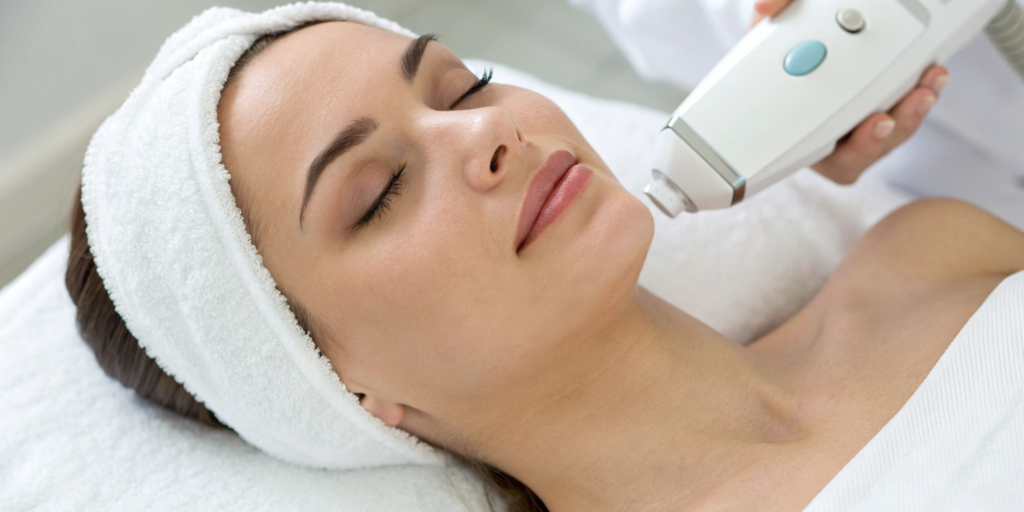
Acne scars can remain long after active breakouts have settled, affecting how you feel in photos, at work, or simply looking in the mirror. The right treatment depends on whether you are dealing with discoloration, uneven texture, or depressed scars, as well as your skin type and current acne activity.
Chemical peels for acne scars San Diego may help by exfoliating damaged surface layers and supporting new tissue regeneration. A professional assessment is important because the peel agent, strength, and treatment plan should be selected for your skin and scar pattern. Clinical research also notes that peels may be combined with other procedures when appropriate.
Schedule Your Free Consultation to discuss a personalized plan with RewindMD.
Understanding how acne scars form is the first step toward choosing an approach that supports smoother-looking, healthier skin without promising an overnight transformation.
Chemical Peels For Acne Scars San Diego: Understanding Acne Scars and How Chemical Peels Can Help
Chemical peels for acne scars San Diego patients choose can support smoother-looking skin by exfoliating damaged surface layers and encouraging renewal beneath them. Because scar type, skin tone, active acne, and healing history vary, a professional assessment is important before selecting the appropriate peel depth or combining treatment approaches.
Acne scars develop during the skin’s healing response, not simply because acne leaves a mark behind. Prolonged inflammation can damage the collagen framework that normally supports the skin. When that collagen is lost or remodeled unevenly, the surface may heal with depressions, uneven texture, or changes in pigmentation. Managing active acne alongside scar treatment is often part of a more complete plan.
Atrophic scars are commonly grouped by their shape and depth:
- Icepick scars: narrow, deep openings that extend into the skin.
- Boxcar scars: broader depressions with more defined, often angular edges.
- Rolling scars: shallow, wave-like depressions created by uneven tethering beneath the surface.
These patterns do not respond identically to every treatment. A peel may be better suited to superficial unevenness and texture, while deeper or sharply defined depressions may require a layered plan. The choice of agent and strength depends on skin type, current acne activity, and scar morphology, as noted in clinical literature on chemical-peel treatment for acne scars (peer-reviewed acne-scar research).
A professional chemical peel creates a controlled injury in the epidermis, and in some cases the dermis, so damaged outer tissue can exfoliate and new tissue can regenerate. This process removes superficial lesions and may stimulate collagen production, which can gradually soften the appearance of some pitted scars. Results vary, and a series of treatments may be recommended rather than a single session.
RewindMD’s physician-led approach considers resurfacing alongside broader skin health. The practice offers more than 28 skin modalities for acne, pigmentation, and texture, allowing the plan to be adjusted as the skin responds. Explore skin treatments for acne and pigmentation to see how treatment options may fit into a personalized consultation.
Types of Chemical Peels for Acne Scarring at RewindMD
RewindMD offers several peel and resurfacing options for acne scars, uneven tone, enlarged pores, and active breakouts. The right choice depends on your skin type, acne activity, scar pattern, and recovery preferences. Options range from a superficial VI Peel to customized Fotona laser resurfacing, with treatment selected during a physician-led consultation.
Each option addresses a different combination of texture, discoloration, oil production, and acne-related inflammation. A peel may support smoother-looking skin, but it is not a universal solution for every scar type. RewindMD evaluates the condition of your skin before recommending a treatment plan.
VI Peel Original
VI Peel Original is designed to improve overall tone, texture, and clarity. RewindMD materials describe visible clarity improvements in approximately seven days, although the timing and degree of peeling can vary by patient. This formulation may be appropriate when post-acne discoloration and uneven surface texture are primary concerns rather than active, inflamed acne.
VI Peel Purify
VI Peel Purify is the more targeted option for acne-prone skin. Its formulation is intended to support acne management through exfoliating, antibacterial, and anti-inflammatory effects. It may be considered when active breakouts are present alongside residual marks. Because ongoing inflammation can contribute to additional scarring, managing current acne is an important part of a broader scar-treatment strategy.
VI Peel Precision Plus
VI Peel Precision Plus provides a dual-action approach for pigmentation concerns such as melasma and sun damage. Patients whose acne scars appear primarily as dark marks may benefit from discussing this option, particularly when uneven tone extends beyond individual blemishes. Pigment-focused treatment requires careful assessment and consistent sun protection, especially for skin prone to post-inflammatory discoloration.
Carbon (Hollywood) Peel
The Carbon, sometimes called Hollywood, Peel focuses on pores, dullness, oil control, and overall brightness. It may help loosen surface buildup and improve the appearance of congested or oily skin. This can be useful for patients whose acne concerns include enlarged-looking pores and uneven tone, although deeper indented scars may require a different resurfacing approach or combination plan.
Fotona Laser Resurfacing
Laser resurfacing with Fotona is not a chemical peel, but it is another resurfacing option available for acne-scar concerns. Its depth can be customized from superficial to deeper ablation, allowing the plan to be matched more precisely to skin condition and treatment goals. A clinician must determine whether laser resurfacing, a peel, or a staged combination is appropriate.
- For tone and general texture: VI Peel Original may be considered.
- For active acne: VI Peel Purify is the targeted formulation.
- For melasma or sun damage: VI Peel Precision Plus addresses pigmentation concerns.
- For pores and oil control: Carbon Peel may be discussed.
- For more customizable resurfacing: Fotona laser can be evaluated.
The standard price for a chemical peel at RewindMD is $300. Members receive a 5% to 10% discount depending on membership tier. Your consultation can also address complementary medical grade skincare, aftercare, and whether another modality should be included to support long-term skin health.
What to Expect During a Chemical Peel Treatment
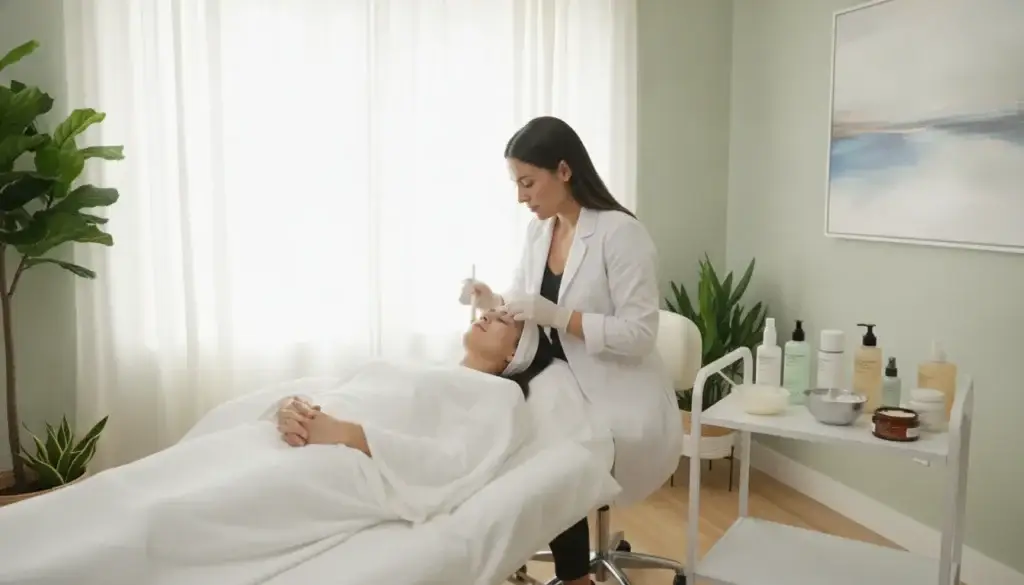
A chemical peel appointment begins with a professional skin evaluation, followed by careful preparation and application of a selected peel. Your provider will explain expected sensations, peeling, redness, and aftercare before treatment. Recovery depends on peel depth, skin response, and how closely you follow sun-protection and aftercare instructions.
- Start with a consultation and skin evaluation. At RewindMD, the process begins with a physician-led review of your skin type, current acne activity, scar pattern, medical history, and skincare routine. These details help determine whether a peel is appropriate and which approach may best support your goals. A series of treatments may be recommended rather than a single appointment, since research suggests that repeated peels can improve acne-scar appearance and help maintain clinical results over time. You can schedule a consultation to discuss a personalized plan.
- Prepare the skin before application. Your provider may review which products or procedures to pause before treatment. On the day of your appointment, the skin is cleansed and prepared so the peel can be applied evenly. The specific formula and strength are selected according to your skin characteristics and the type of scarring being addressed, not simply based on a one-size-fits-all schedule.
- Expect a brief application with manageable sensations. The solution is applied to targeted areas while your provider monitors your response. Depending on the formulation, you may notice tingling, warmth, tightness, or stinging. Tell your provider if discomfort feels unusually intense. Treatment is controlled and should not be treated as a do-it-yourself procedure. Do not pick, scrub, or manually peel the skin afterward, even if flaking becomes noticeable.
- Plan recovery according to peel depth. A light peel generally involves minimal downtime, although mild dryness or flaking can occur. Some VI Peel results may become visible at approximately seven days. A medium-depth peel can involve visible peeling and redness for about five to seven days. Deeper treatments may require seven to fourteen days, with more significant peeling and prolonged redness. Inline image suggestion: a clean, text-free three-panel clinical lifestyle image showing calm skin immediately after treatment, light flaking during recovery, and refreshed skin after healing.
- Protect and support the skin during healing. Follow the exact professional aftercare plan, use broad-spectrum sun protection as directed, avoid deliberate sun exposure, and keep the skin gently moisturized. Sun exposure during recovery can worsen irritation and pigmentation. Contact the clinic if you have concerns about your reaction rather than adding exfoliants or active products on your own.
Recovery is not a race. Your provider can adjust timing, peel depth, and future treatments as your skin responds, helping keep the plan focused on gradual, supportable improvement.
Chemical Peels vs Other Acne Scar Treatments at RewindMD
The most appropriate option depends on whether your primary concern is surface texture, depressed scarring, active acne, excess oil, or several of these concerns together. Chemical peels can support skin renewal, while microneedling, laser treatments, and light-based therapies address different layers and causes.
There is no single acne scar treatment that suits every patient. During a physician-led evaluation, RewindMD considers your skin type, current acne activity, scar pattern, recovery preferences, and overall skin health. The comparison below offers a starting point, not a diagnosis or a guaranteed outcome.
| Treatment | Primary focus | RewindMD details | When it may fit |
|---|---|---|---|
| VI Peel | Surface tone, texture, and clarity | $300 per standard peel | Patients seeking professional exfoliation and support for uneven tone or mild textural concerns |
| Microneedling with PRP | Fine lines, pores, and acne-scar texture | $700 value; included in the Time Machine membership | Patients considering collagen-supporting treatment for textural changes and select atrophic scars |
| Fotona Laser Resurfacing | Scar smoothing and resurfacing | Depth can be customized to the treatment plan | Patients who may benefit from more adjustable resurfacing beyond a superficial peel |
| Blue Light Therapy | Active acne | Targets acne-causing bacteria | Patients who need to address ongoing breakouts before or alongside scar-focused care |
| Nd:YAG Laser | Oil control | Designed to suppress sebaceous gland activity and reduce oil production | Patients whose active acne or congestion is associated with excess oil |
These treatments are not always mutually exclusive. Research suggests that combining microneedling with a chemical peel may create a synergistic effect for atrophic acne scars, although treatment suitability and timing require professional assessment (F003). Reviews also note that chemical peels may be combined with other procedures to improve clinical results, while combination peel approaches can help balance efficacy and side effects (F010, F012).
For patients comparing options, our guide to chemical peel cost and results provides additional context. A consultation can clarify whether a peel alone, a staged plan, or a combination approach makes sense for your skin.
Why Choose RewindMD for Chemical Peels in San Diego
RewindMD offers physician-led care for chemical peels for acne scars San Diego patients can pursue with a broader skin and wellness plan, not a one-size-fits-all procedure. Dr. Scott Gillin, a dual board-certified physician, evaluates your skin, acne activity, goals, and overall health before recommending an appropriate next step.
Located in Encinitas, RewindMD serves patients throughout San Diego County, including North County communities. That local access matters when acne scarring involves more than surface texture. Active breakouts, pigmentation, sensitivity, and lifestyle factors can all influence how your skin responds to treatment. A professional assessment helps determine whether a chemical peel is appropriate and whether another modality or a staged combination approach may better support your goals.
RewindMD takes an integrated approach that connects aesthetic care with functional wellness. Depending on your needs, your broader plan may include conversations about hormones, nutrition, sleep, skin health, and daily habits. The goal is to support confidence from the inside out while keeping recommendations grounded in your individual circumstances. Results vary, and no treatment can guarantee complete scar removal.
A wider range of options for changing skin needs
With more than 28 skin modalities addressing acne, pigmentation, and texture, RewindMD can refine a plan as your skin changes. A peel may be one component of care, while other options may be considered when scars, active acne, or uneven tone require a different type of support. Explore the clinic’s skin treatments for acne and pigmentation to understand the broader category of services, and use our blog for educational guidance.
- Physician oversight from a dual board-certified doctor
- Personalized recommendations based on skin type, acne activity, and scar characteristics
- Access to more than 28 skin-focused modalities
- Integrated consideration of hormones, nutrition, sleep, and long-term skin wellness
Membership options for ongoing care
Patients who prefer a longer-term approach can also explore RewindMD membership options. The Rewind membership is $149 per month, Turn Back Time is $249 per month, and Time Machine is $449 per month with annual credits. Membership benefits include savings on eligible services, with chemical peel discounts varying by tier. During a consultation, the team can explain current benefits and help determine whether membership fits your care plan.
Schedule a personalized consultation before treatment so a RewindMD clinician can discuss suitability, expected recovery, and the most appropriate path for your skin.
Frequently Asked Questions
Can chemical peels improve all types of acne scars?
Chemical peels may improve the appearance of some superficial and atrophic acne scars by exfoliating damaged skin and supporting tissue renewal. Their effect depends on scar depth, texture, skin type, and whether acne is still active. Deeper or sharply indented scars may need a different treatment or a combination approach.
How do I know which peel is right for my skin?
A qualified provider should select the peel after evaluating your skin type, current acne activity, pigment concerns, and scar morphology. A peel designed for active acne is not necessarily the best choice for textural scarring, and a stronger treatment is not automatically better for every patient.
How many chemical peels will I need for acne scars?
There is no universal number of treatments. Your provider may recommend a series based on your response, the type of scarring, and your broader skin goals. A consultation is important because treatment frequency and peel strength should be adjusted to your skin rather than chosen from a fixed schedule.
Can chemical peels be combined with other acne scar treatments?
Yes. Chemical peels may be combined with treatments such as microneedling when a personalized plan calls for more than one approach. Research has explored combined treatments for atrophic acne scars, but the safest sequence depends on your skin condition, healing response, and the specific products or procedures used.
What should I do before scheduling a peel?
Start with a professional consultation, especially if you have active breakouts, sensitive skin, a history of pigment changes, or recent sun exposure. Bring a list of current skincare products and medications, and follow the preparation and sun-protection instructions provided for your individualized treatment plan.
Ready to Address Your Acne Scars?
If you have been searching for chemical peels for acne scars San Diego patients trust, RewindMD offers a personalized, physician-led approach to skin renewal. Our team will evaluate your skin, recommend the right peel depth and formulation, and build a treatment plan designed for your unique scarring pattern.
Take the first step toward smoother, more confident skin today.