Hair loss can feel like a silent thief of confidence for both men and women. While many assume that surgical transplants are the only option, modern clinical science points toward early, non-surgical intervention. Addressing thinning hair at its root cause is the key to achieving sustainable, natural-looking fullness.
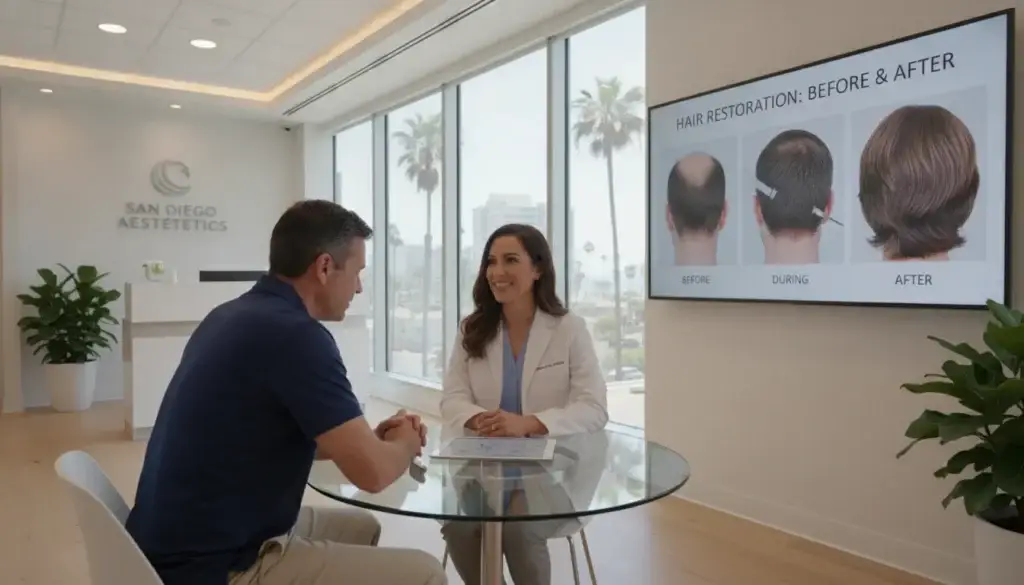
For individuals seeking effective hair restoration San Diego clinics provide advanced non-surgical therapies that target the underlying biological causes of thinning. Modern treatments at physician-led practices like RewindMD in Encinitas focus on regenerative medicine to stimulate dormant hair follicles. These therapies include platelet-rich plasma (PRP) and platelet-rich fibrin (PRF) injections, which use autologous growth factors to reverse follicle miniaturization. According to research on platelet-rich plasma therapy, these biological growth factors can successfully promote follicular cell proliferation and support healthy hair regrowth. By combining these injections with exosome therapy, low-level laser stimulation, and personalized medical management. Patients can address hair loss from multiple biological angles without the downtime or invasiveness of traditional surgery.
Ready to take the first step toward fuller hair? Schedule your free consultation at RewindMD today and let our physician-led team build a personalized hair restoration plan for you.
To find the right path for your needs, you must first understand why your hair is thinning. The sections below explain how hormones, genetics, and lifestyle factors affect your scalp, and how modern treatments can help restore natural growth.
Understanding Hair Loss: What Causes Thinning in Men and Women
Hair loss is not a single issue with a simple fix, but a complex process that stems from genetic traits, hormonal shifts, stress, and poor nutrition. Finding the true cause of thinning is the first step toward real regrowth. At RewindMD, we use a root-cause approach to identify why your hair is thinning before we start any care plan.
The Role of DHT and Genetic Factors
For many men and women, thinning comes down to genes. In male pattern baldness, a hormone called dihydrotestosterone (DHT) binds to scalp hair follicles. This hormone causes follicles to shrink over time, making hair grow thinner and shorter. Women can also have genetic hair thinning, though it tends to show as a wide part line rather than a receding hairline.
To fight this process, modern treatments like platelet-rich plasma (PRP) can be used. Medical studies show that PRP targets dysregulated mechanisms in scalp hair follicles to help them grow. These autologous growth factors work on a cellular level to reverse follicle shrinkage. If you are experiencing early signs of thinning, learning about PRF and microneedling treatments can help you understand how regenerative options complement medical management.
Hormones, Stress, and Nutrient Deficiencies
Your hair is highly sensitive to changes inside your body. Thyroid issues, low iron, and low vitamin levels can all stop new hair growth. For women, big drops in estrogen after childbirth or during menopause often lead to rapid hair shedding. Major stress can also trigger a state called telogen effluvium, which forces hair follicles into a resting phase all at once.
Our team in San Diego runs full lab tests to check your thyroid, iron, and key hormone levels. By fixing these internal issues first, we can support your body’s natural growth cycle. This diagnostic foundation ensures you get the best outcome from your treatment plan.
The Functional Medicine Approach to Regrowth
Traditional clinics often treat hair loss with topical creams or quick surgeries. Our clinic uses functional medicine to assess your health from the inside out. We combine lab work with custom therapies to wake up dormant follicles and feed the scalp. Using platelet-derived growth factors can potentially stimulate the follicle’s miniaturization reversal process. When we combine these growth factors with hormone support, we help you achieve long-term results.
How PRP and PRF Injections Support Hair Regrowth
Platelet-rich plasma (PRP) and platelet-rich fibrin (PRF) use your body’s natural healing power to reverse hair thinning. By concentrating growth factors from your own blood, these non-surgical scalp injections help reactivate resting follicles. This biological approach works from the inside out to support healthier, thicker hair regrowth without surgery or extended recovery time.
The Science of Platelet-Rich Therapy
Platelet-rich plasma treatments for androgenetic alopecia work by targeting dysregulated mechanisms in the scalp and hair follicle to promote regrowth. You can find detailed research on this process through the National Institutes of Health database. PRP is utilized in hair restoration because platelet-derived growth factors can potentially stimulate the hair follicle’s miniaturization reversal process. This stimulation helps increase blood flow to the hair roots and extends the active growth phase of your hair.
How PRP Differs From PRF
While both methods use your own blood, they process and release growth factors in different ways:
- PRP is spun at high speeds and requires anticoagulants to keep the liquid from clotting. It provides a concentrated dose of platelets that release growth factors quickly.
- PRF is spun at a slower speed without any chemicals, creating a natural fibrin scaffold. This scaffold acts as a slow-release system, letting the healing factors work over a longer time.
- Which to choose depends on your specific hair loss pattern, goals, and treatment timeline. During your consultation, we will help you find the best option.
Your Treatment Experience and Combination Care
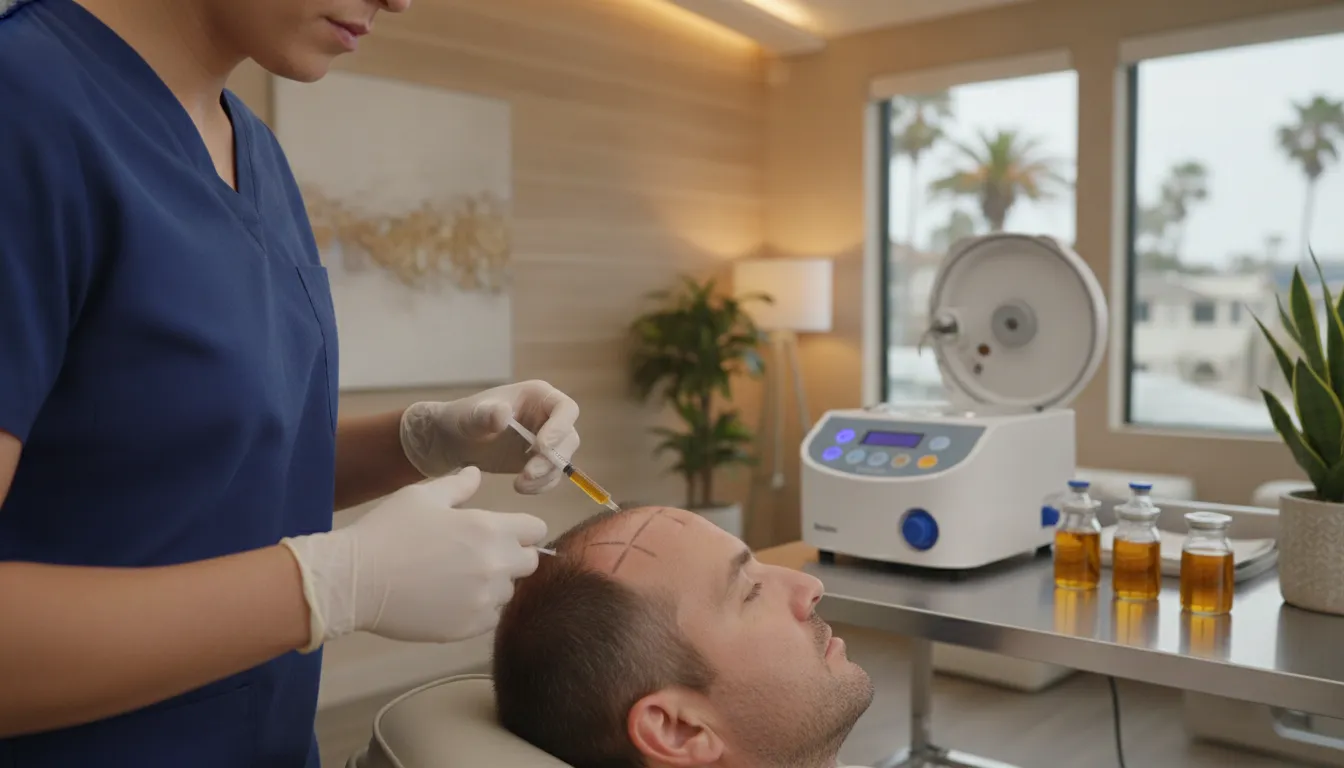
At RewindMD, your session starts with a quick blood draw. We spin the blood in a centrifuge to isolate the rich plasma or fibrin. Next, we inject the growth factors directly into target areas of your scalp. We often combine these injections with microneedling to boost your results. This step creates micro-channels that help the scalp absorb the growth factors more effectively. The process is quick, has minimal downtime, and fits easily into a busy schedule.
What to Expect: Timeline and Costs
Consistency is key for regenerative scalp therapies. Most patients need a series of three to four initial sessions spaced about one month apart. You may see early changes in hair texture and shedding within three months, but visible regrowth usually takes six months. To make care easier, our Time Machine membership includes one complimentary microneedling with PRP session, which is a seven hundred dollar value. You can also review pricing details on our PRP hair restoration cost page for planning purposes.
What Is Exosome Therapy for Hair Loss and How Does It Differ from PRP?
Exosome therapy for hair loss is an advanced regenerative treatment that uses isolated cellular messenger vesicles to deliver rich growth factors. Cytokines, and signaling molecules directly to dormant hair follicles. While PRP relies on growth factors harvested from your own blood, exosome therapy uses highly concentrated, pre-packaged signaling proteins. This modern option offers a more potent method to support natural hair regrowth for patients in San Diego and North County.
The Science of Cellular Communication
Exosomes are tiny vesicles that cells release to talk to each other. They do not contain cells themselves, but they carry a heavy payload of active proteins, mRNA, and cytokines. When applied to the scalp, these vesicles target hair follicle stem cells. They signal these sleeping follicles to enter the active growth phase, which can help reverse follicle miniaturization and thicken thinning hair strands over time.
How Exosomes Differ from PRP Injections
The main difference between these two treatments is the origin and concentration of the growth factors:
- PRP requires a blood draw spun in a centrifuge. The success depends on the health of your own blood cells.
- Exosome therapy uses lab-purified vesicles that contain up to fifteen times the concentration of growth factors found in standard PRP.
- Because exosomes are cell-free, they do not carry the risk of a cellular immune response, making them a safe option for many patients.
A Holistic Part of Hair Restoration
At RewindMD in Encinitas, we do not view hair loss as just an isolated cosmetic issue. Our physician-led clinic combines exosome therapy with a broader functional medicine model. We evaluate underlying hormone imbalances, thyroid health, and nutritional gaps. This complete, inside-out approach ensures your scalp has the optimal environment to support new growth. Scientific studies highlight how cellular therapies target follicle pathways. Research on growth factors in hair regrowth shows that signaling proteins can stimulate cell division in follicle roots.
Does Low-Level Laser Therapy Really Help Hair Growth?
Low-level laser therapy (LLLT) is a proven, non-invasive option that can support hair growth without surgery. Modern clinics use this FDA-cleared technology to stop thinning and wake up sleeping hair follicles. When used as part of a custom care plan, laser therapy and medical support can help you achieve thicker, fuller hair with no downtime or discomfort.
How Laser Light Wakes Up Hair Follicles
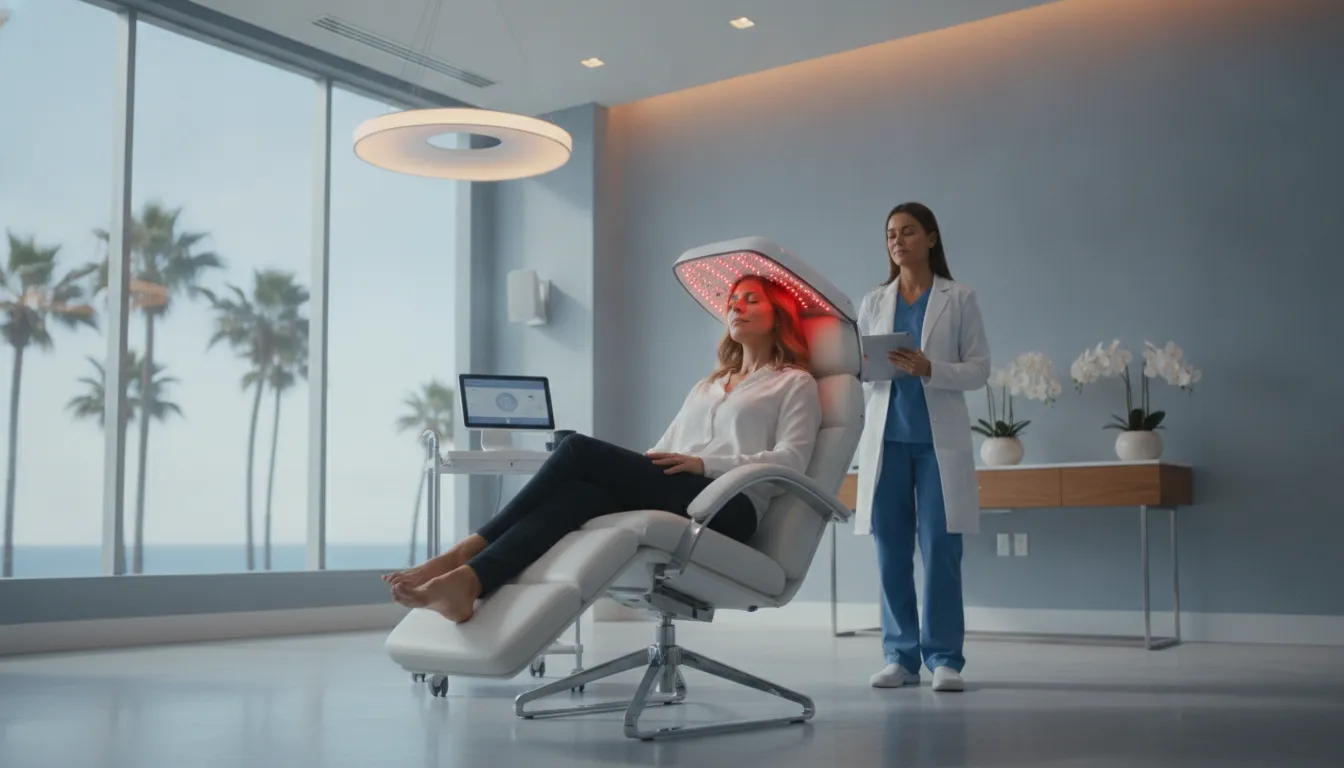
Low-level laser therapy works through a process called photobiomodulation. The device shines safe, red laser light onto your scalp. Cells in your hair follicles absorb this light and turn it into energy. This process helps boost blood flow to your scalp and deliver more oxygen to thin hairs. Studies hosted by the National Institutes of Health show that targeting these pathways can promote hair regrowth in people with pattern hair loss. This gentle light therapy is designed to help reverse hair thinning without pain or downtime.
Choosing At-Home or In-Office Laser Devices
You can get laser hair therapy in two main ways:
- In-office laser hoods at a clinic are strong and cover your whole head. They give you a deep, even treatment under professional supervision.
- At-home devices like laser caps or combs let you treat your scalp on your own schedule. Both options may help, but in-office sessions often give faster results.
Our team can help you choose the best device for your hair needs and lifestyle during your free consultation in Encinitas.
Medical Care and Hormone Balance
Topical and oral prescription drugs are often the first line of defense against hair loss. Treatments like finasteride, minoxidil, or spironolactone work to block the hormones that cause hair to thin. For many patients, hormone optimization is also a key step. Thinning hair is often tied to thyroid changes or aging hormones. Safe hormone replacement therapy can balance your body from the inside out to support healthy hair growth. If you are exploring these options, our hair restoration San Diego page provides more details on how we combine multiple approaches.
Non-Surgical vs. Surgical Hair Restoration: Which Approach Is Right for You?
For many people dealing with hair loss, choosing between surgical transplants and non-surgical treatments is the most important step in their recovery process. While a surgical hair transplant can relocate active hair follicles to bald areas, non-surgical therapies focus on reviving weak follicles and stopping hair loss before it spreads. At RewindMD, we focus on non-surgical solutions that support your body’s natural healing pathways to promote healthy, sustainable growth without the cost and recovery of surgery.
Comparing Your Restoration Options
To find the best path for your needs, it helps to compare the main differences in cost, recovery time, and results. Surgical procedures like Follicular Unit Extraction (FUE) or Follicular Unit Transplantation (FUT) require a doctor to harvest and transplant hair grafts. In contrast, non-surgical methods work by stimulating the scalp without incisions.
| Treatment Type | Average Cost | Downtime | Time to Results | Ideal Candidate |
|---|---|---|---|---|
| PRP / PRF Therapy | $500 – $1,500 per session | None | 3 – 6 months | Mild to moderate thinning |
| Exosome Therapy | $800 – $2,000 per session | Minimal | 3 – 6 months | Early to moderate hair loss |
| LLLT (Laser Devices) | $200 – $1,000 (home devices) | None | 6 – 12 months | Early-stage thinning |
| Medical Management | Varies (ongoing) | None | 3 – 12 months | Hormonal or systemic thinning |
| Surgical FUE / FUT | $4,000 – $15,000+ | 1 – 2 weeks | 12 – 18 months | Significant baldness, stable donor hair |
Why Early Intervention Is Key
If you are experiencing active hair loss, starting treatments early gives you the best chance of success. Once a hair follicle dies and is replaced by scar tissue, non-surgical options can no longer revive it. Research published in the National Institutes of Health library shows that treatments like PRP can reverse hair follicle thinning by using natural growth factors to stimulate cell growth. Starting a custom plan early helps you preserve your existing hair and avoid the high costs and long recovery of surgery.
Wondering if non-surgical hair restoration is right for you? Contact RewindMD to schedule your free consultation today and let our team assess your hair loss stage and recommend the best approach.
What to Look for in a Hair Restoration Provider in San Diego
Choosing a clinic for hair restoration in San Diego requires a careful look at medical leadership, treatment options, and patient care. Finding the right provider in North County San Diego can make a major difference in your results. To get the best care, look for a clinic that goes beyond basic surface treatments to address the root causes of hair thinning with a physician-led, integrated approach.
Physician Leadership and Medical Credentials
The first thing to check is who directs the clinic and plans your care. Many clinics use NP or PA staff with little direct oversight from a doctor. For safe and reliable results, look for a practice led by a board-certified physician. A doctor with deep clinical training understands how your whole body affects hair growth. At RewindMD in Encinitas, Dr. Scott Gillin leads our team with extensive medical experience. A qualified doctor can evaluate your medical history and run necessary tests to find out why you are losing hair.
Integrated Treatment Options Under One Roof
Hair loss is complex and rarely has just one cause. Clinics that only offer one treatment, like surgical transplants or simple topical creams, often miss the bigger picture. The best providers offer a broad range of therapies that work together:
- PRP and PRF scalp injections for regenerative growth factor stimulation
- Exosome therapy for concentrated cellular signaling
- Low-level laser therapy for non-invasive follicle stimulation
- Medical management with prescription treatments and hormone optimization
Clinical research shows that targeted pathways in the hair follicle respond well to multi-step care. Our clinic serves patients from Del Mar to La Jolla with treatments like PRP, exosomes, and peptide therapy to support natural regrowth from the inside out.
Personalized Testing and Custom Plans
There is no single treatment that works for everyone. Your hair loss might stem from genetics, stress, thyroid issues, or nutritional gaps. An expert provider will not guess at the cause. They should use diagnostic tools to build a custom plan for you. This includes lab work to check your hormone levels and nutrient status. By finding the true trigger for your hair thinning, a physician can design a targeted plan. Learn more about how our approach works by visiting our hair restoration service page.
Frequently Asked Questions
What are the common non-surgical hair restoration options in San Diego?
Non-surgical options include Platelet-Rich Plasma (PRP), Platelet-Rich Fibrin (PRF), and advanced exosome therapy. These methods deliver concentrated growth factors directly to the scalp. Many patients also use low-level laser therapy and medical options like hormone optimization. According to studies indexed in the National Institutes of Health database, these therapies can support growth by targeting dysregulated pathways in hair follicles.
Who is a good candidate for non-surgical hair restoration?
The best candidates are men and women experiencing early to moderate hair thinning or active shedding. These treatments work best on hair follicles that are still active but producing weaker, thinner strands. Individuals with complete baldness or fully scarred follicles may not see optimal results. A physician-led evaluation helps find the root cause of your hair loss to design a custom treatment plan.
How long does hair restoration recovery take for non-surgical treatments?
Non-surgical treatments like PRP or exosome injections require virtually no downtime. Most patients can return to their daily routines immediately after their session. You may experience mild scalp redness, swelling, or tenderness for a day or two. Since these methods do not require surgical incisions, there are no scars to heal and no complex recovery steps to follow.
How much does hair restoration typically cost in San Diego?
The cost of hair restoration depends on the specific treatments you need and the number of sessions. Non-surgical options like PRP are typically priced per session or as a package of treatments. Since we customize each plan to your hair loss stage and goals, we provide exact pricing during your visit. You can learn more by scheduling a free consultation.
Ready to Explore Hair Restoration in San Diego?
Delaying treatment for thinning hair can make it much harder to get the results you want. Thinning often gets worse over time if left alone. Starting your journey early can help protect your existing hair and support natural growth before follicles become inactive. At our clinic in Encinitas, we build custom plans designed to help you restore thick, healthy hair using advanced regenerative tools and holistic medical care.
Do not wait for hair loss to progress. Schedule your free consultation at RewindMD today and take the first step toward a fuller, more confident you. Our physician-led team in Encinitas serves patients throughout North San Diego County, including Del Mar, Solana Beach, Cardiff-by-the-Sea, Rancho Santa Fe, Carlsbad, La Jolla, and Carmel Valley.